Yaya's Birding Tours
Birding in The Gambia

More than 600 species in a country you can cross in an afternoon

The Gambia is the smallest country on mainland Africa, yet its bird list runs past 600 species, from forest turacos and mangrove kingfishers to Sahelian raptors and a winter flood of European migrants. English is the official language, flights from the UK take about six hours, and a week with a good local guide can comfortably deliver more than 200 species. This guide explains when to come, where to go and which birds are worth planning a trip around.

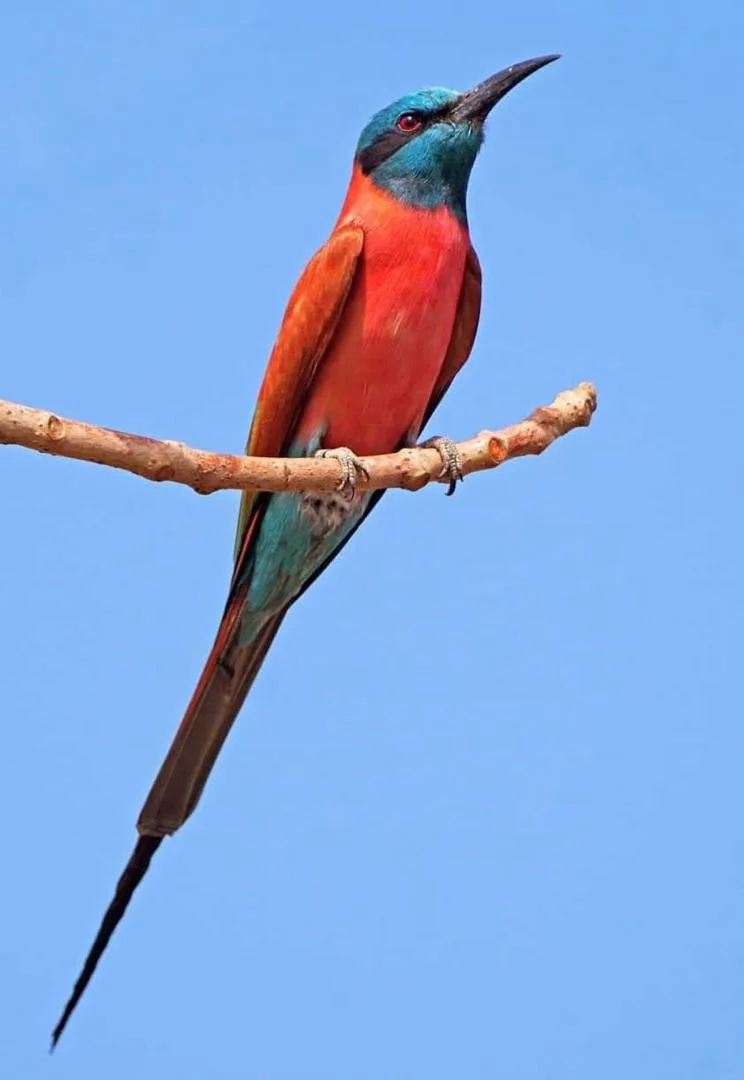
Northern Carmine Bee-eater, photographed in The Gambia
bird species recorded in The Gambia
600+
across at its widest point
Under 50 km
flight from the UK
About 6 hours
the classic birding season
Nov to Mar

Why The Gambia

Everything within reach

The Gambia is under 50 km across at its widest and follows a single river. Mangrove creeks, coastal lagoons, forest patches and savanna are linked by one road network, so you spend your time birding rather than in transit. Operators describe it as an efficient place to see a wide range of habitats in one trip.

English-speaking and easy to arrange

English is the country's only official language, and travel from the UK is direct and short with no time difference in winter. Birding operators describe good accommodation and infrastructure within reach of the airport, which makes The Gambia an unusually gentle first trip to Africa.

Residents and migrants together

The Gambia sits on the Palearctic flyway, so European migrants arrive from October and November and leave in March and April, mixing with African residents and intra-African visitors. A single winter day can combine familiar waders and warblers with turacos, bee-eaters and kingfishers.

A list that rewards the specialist

Beyond the headline species such as Egyptian Plover, African Finfoot and Northern Carmine Bee-eater, there are Endangered raptors at Kiang West and Vulnerable species such as Abyssinian Ground Hornbill. The country has no endemic species, but many of the West African birds visitors most want are reliably available here.

A guiding tradition

The Gambia has an established community of licensed bird guides, represented by the Bird Watchers' Association, which works with the Gambia Tourism Board. A local guide knows where the roosting owls, nightjars and river specialists are on a given week, which is often the difference between hearing a species and seeing it.

When to go

PeakGoodQuiet
  1. Jan Peak

    Dry, sunny and comfortable, with migrants well established and raptor numbers building. Mornings and evenings are the best birding; midday is hot. River levels are low, which suits upriver trips.

  2. Feb Peak

    Much the same as January, with plenty of raptors and migrants. A popular month for operator-run tours.

  3. Mar Good

    Still dry, with plenty of raptors, and warming up. It is described as the best time for coursers and sandgrouse. Migrants begin leaving later in the month.

  4. Apr Good

    The hottest, driest part of the year, with temperatures in Banjul reaching about 41 C in April and May. Birds crowd around dwindling water, which makes some easier to find; start early and rest at midday. Many Palearctic migrants have left.

  5. May Quiet

    Hot and building towards the rains, with the migrant spectacle over. Resident birds are starting to breed and sing as the rainy season approaches. Fewer visiting birders.

  6. Jun Quiet

    A transitional month: the first rains are patchy and birds prepare to breed. Southern equatorial birds begin to arrive for the breeding season.

  7. Jul Quiet

    Rainy and green. Local guides regard this as a rewarding time for breeding birds in full song and plumage, though showers and humidity make fieldwork less predictable.

  8. Aug Quiet

    The wettest month in Banjul, at about 347 mm on average. Landscapes are lush and breeding is in full swing, but heavy downpours and humidity limit time in the field. Waterbirds start to gather as floodwaters begin to recede later in the season.

  9. Sep Quiet

    The tail of the rains. Vegetation is dense and humid, but the breeding season is still under way, and birds such as bishops and whydahs are still in breeding dress into October.

  10. Oct Good

    Rains end and humidity falls. Bishops, whydahs and weavers can still be in spectacular breeding plumage, many young have just fledged, and the first European migrants start to arrive. Some tour operators begin running trips from late October.

  11. Nov Good

    Migrants are arriving in numbers, vegetation is still green after the rains, and it is a good time for upriver specialities such as Egyptian Plover. Many operators schedule their main departures in November.

  12. Dec Peak

    Dry, comfortable and busy with birds: a full complement of European migrants alongside African residents, with good conditions throughout the country. Abuko's recognised peak window runs December to March.

Habitats and the birds that live in them

Mangroves and creeks

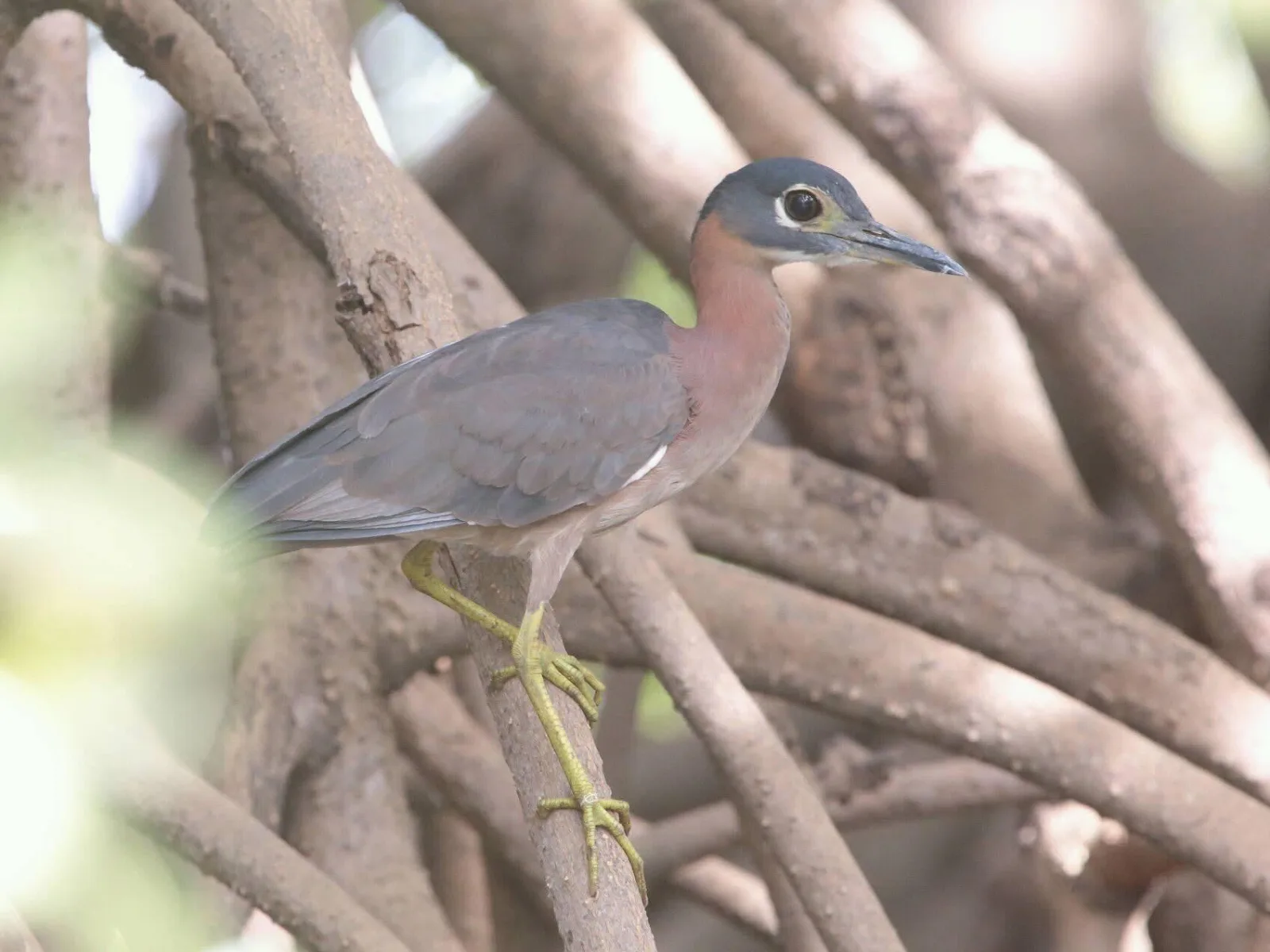
The tidal bolongs of the lower River Gambia are explored by pirogue from Tendaba, passing mangrove walls, mudflats and saltmarsh. This is where you look for African Finfoot, White-backed Night Heron and the occasional Pel's Fishing Owl, and where pelicans, herons and fish eagles are easy to enjoy.

Bao Bolong Wetland ReserveKiang West National Park

Coastal lagoons and beaches

Tanji and Kartong combine tidal lagoons, dune scrub, beach and freshwater pools. In the dry season they hold waders, gulls and terns, and the Bijol Islands off Tanji have The Gambia's only breeding seabird colonies. Kartong is also the site of West Africa's only permanent bird-ringing station.

Tanji Bird ReserveKartong Bird Observatory

Woodland and forest patches

Small community-managed woods such as Brufut are within easy reach of the coast and are known for owls, the Long-tailed Nightjar, turacos and sunbirds. Short walks, shade and local guides make them an excellent first morning.

Brufut WoodsAbuko Nature Reserve

Riverine and gallery forest

Abuko is a pocket of gallery forest along the Lamin Stream and The Gambia's oldest protected area. It is reliable for forest birds such as Green and Violet Turacos, Western Bluebill, Yellow-crowned Gonolek and pygmy and giant kingfishers, with an easy circular trail and hides.

Abuko Nature Reserve

Savanna and farmbush

Away from the coast, Guinea savanna woodland and open country around Kiang West hold the country's finest raptors, including Bateleur, Martial Eagle and Abyssinian Ground Hornbill. Closer to villages, farmbush and gardens add weavers, firefinches, cordon-bleus and tchagras.

Kiang West National Park

Freshwater wetlands and rice fields

Freshwater pools, sandpits and rice fields hold herons, kingfishers and, upriver, Egyptian Plover and bee-eaters. Kartong's reed-fringed pool is a good coastal example, and the sandbanks and wetlands of the upper river are the places to look for the plover.

Kartong Bird ObservatoryBao Bolong Wetland Reserve

The birds people come for

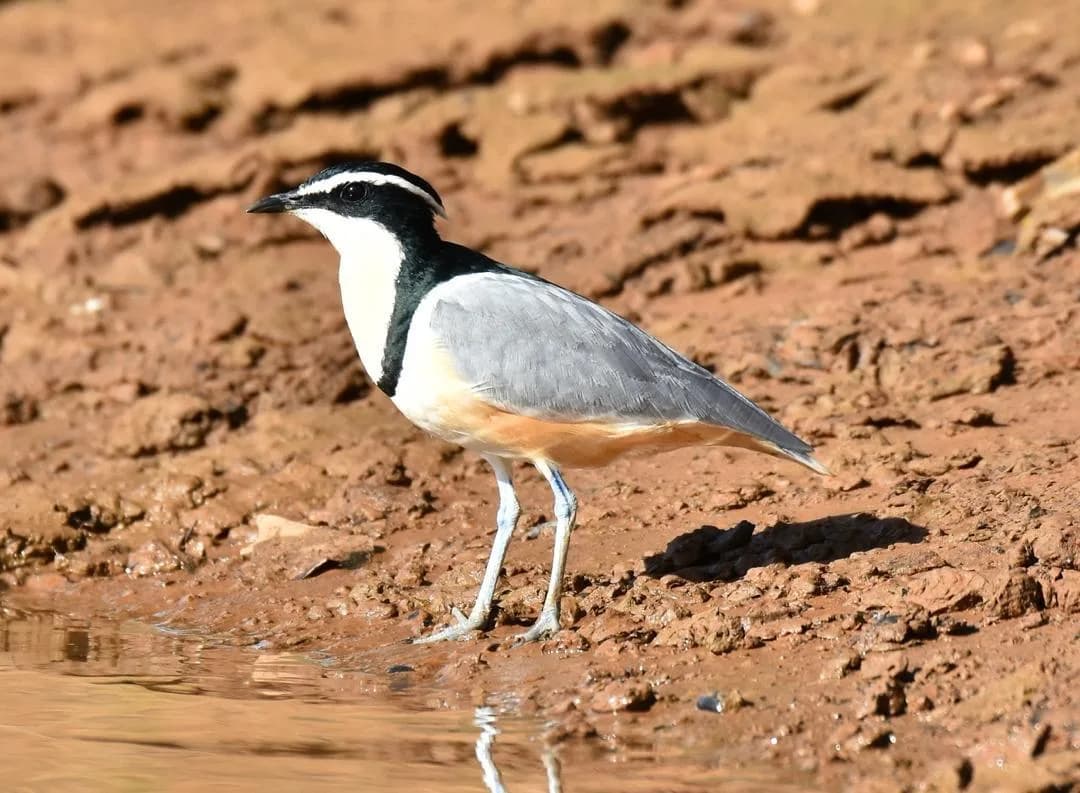
Egyptian Plover

Egyptian Plover

Pluvianus aegyptius

A pale blue-grey, black and buff wader with no close relatives, it is the bird many first-time visitors rank above all others. It is often confiding once found, so photographic chances are good.

Where: Sandbanks and wetlands on the upper river and North Bank, such as Kaur, Kuntaur and the Basse area.
When: Typically seen on upriver trips from late October to January, with November a favoured month; check with your guide, as river levels and numbers vary.
African Finfoot

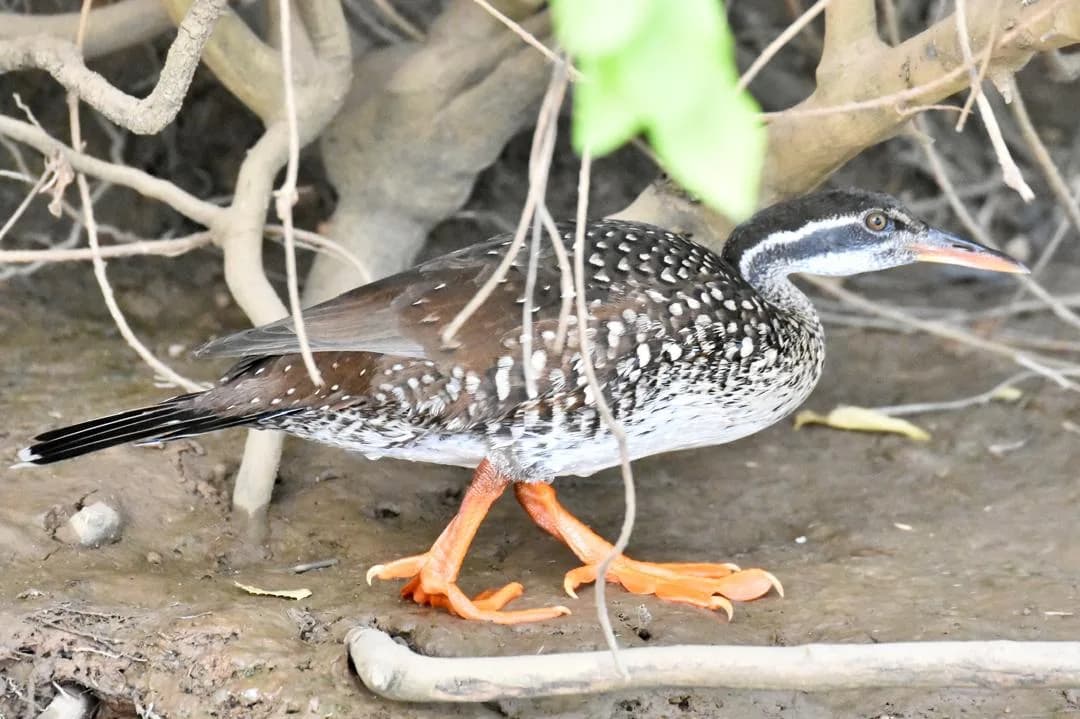
African Finfoot

Podica senegalensis

A secretive, duck-sized waterbird with red feet and a slender neck, one of the great skulkers of African rivers. Seeing one slip out from the mangrove roots is a highlight of the boat trip.

Where: Bao Bolong creeks by boat from Tendaba; also reported at Kartong and forested riverbanks.
When: Resident all year; the dry season is the usual time to go by boat.

Pel's Fishing Owl

Scotopelia peli

One of Africa's most sought-after owls, a huge, russet fish-eater of riverine forest. It is not guaranteed, but boat trips on the Bao Bolong creeks are your best chance.

Where: Bao Bolong creeks (Tunku and Kisi bolongs) from Tendaba.
When: Reported on dry-season boat trips; it is nocturnal and rare, so no month is reliable.

Northern Carmine Bee-eater

Northern Carmine Bee-eater

Merops nubicus

A carmine and turquoise bee-eater, and one of the most spectacular colours on a Gambian trip list, though not always easy to find.

Where: Reported at Bantang quarry on the upper river, near Kartong, and at Wassu and Kuntaur sandpit.
When: A dry-season visitor from the Sahel, most reliable earlier in the season; availability has been inconsistent in recent years.

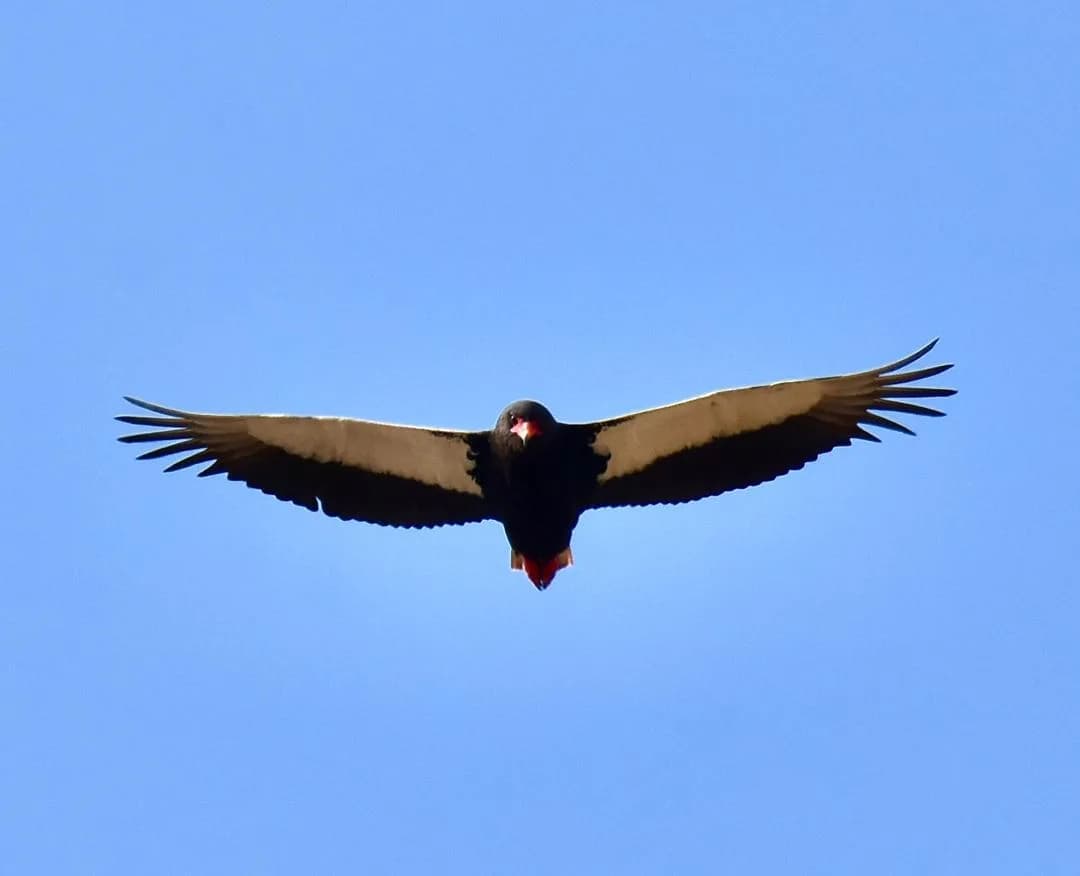
Bateleur

Bateleur

Terathopius ecaudatus

A short-tailed eagle with a rocking, tightrope-walker flight that is easy to recognise. It is Kiang West's official symbol and a conservation priority, since it is now listed as Endangered.

Where: Kiang West National Park and the savanna around Tendaba.
When: Resident year-round; the park is best from November to January when raptor numbers peak.

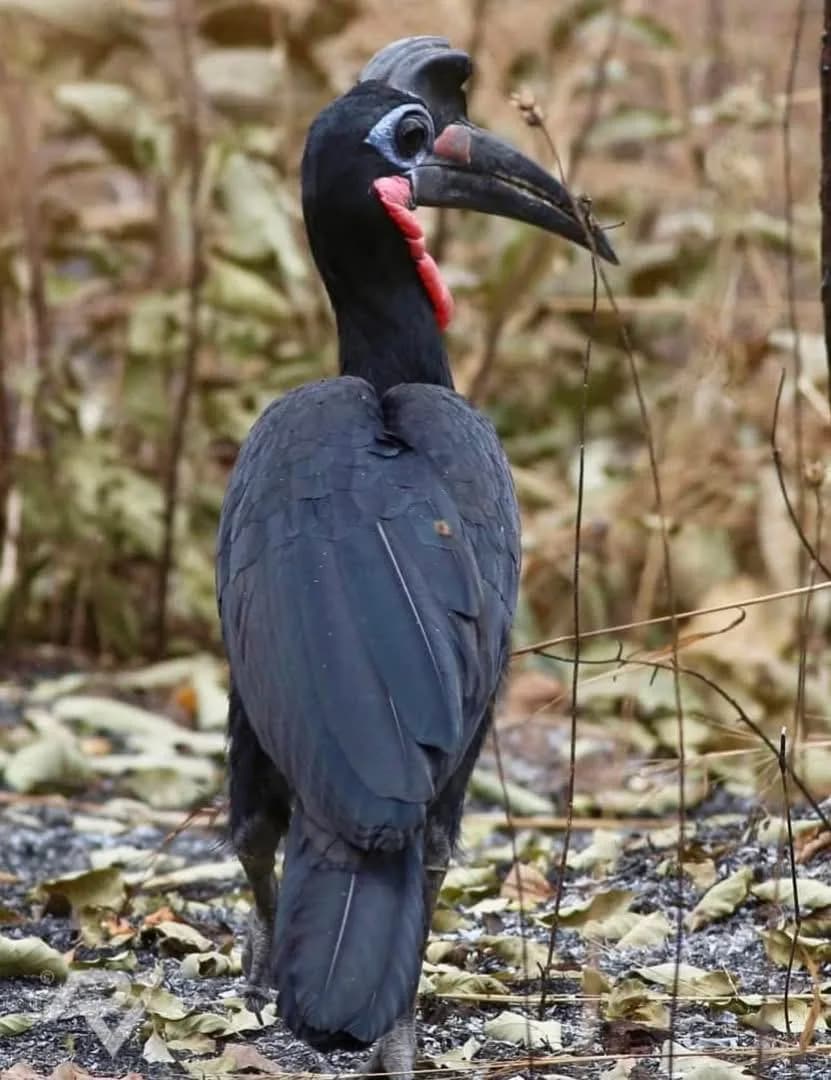
Abyssinian Ground Hornbill

Abyssinian Ground Hornbill

Bucorvus abyssinicus

A turkey-sized, black ground-walking hornbill with a red throat patch, striding across savanna in family groups. A Vulnerable species, it is a rewarding find in the interior.

Where: Kiang West National Park and other savanna areas.
When: Resident all year, so the dry-season trips that suit raptors also suit it.

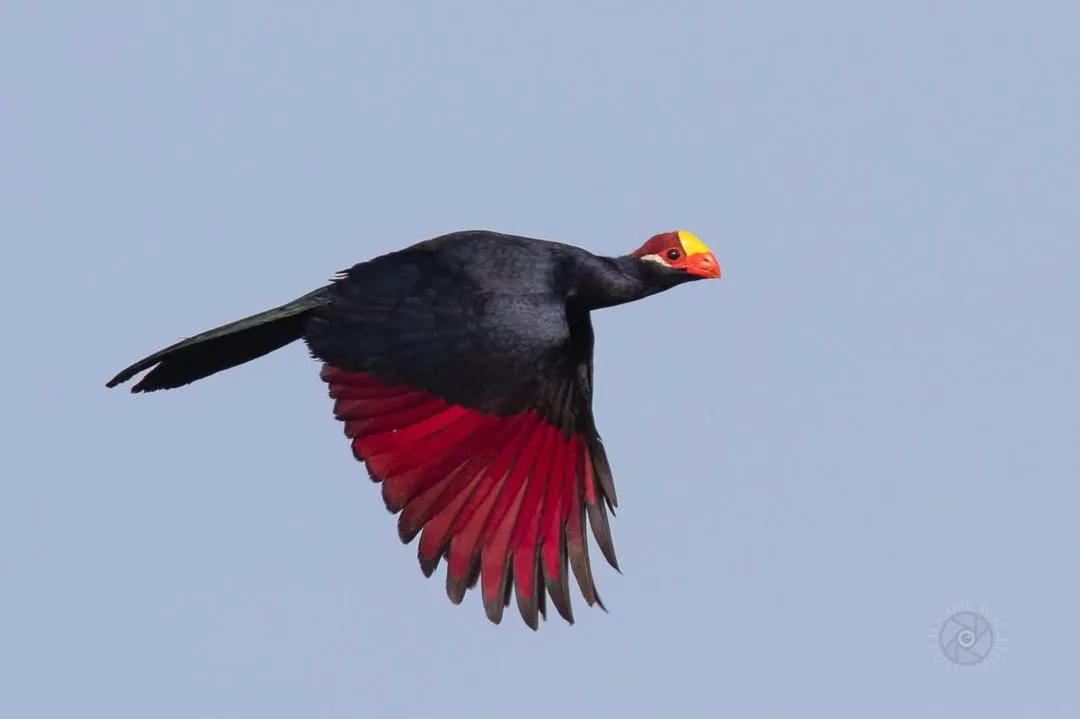
Violet Turaco

Violet Turaco

Musophaga violacea

A glossy violet turaco with a yellow bill shield and crimson wing flashes, wonderfully conspicuous once spotted. It is a common resident.

Where: Abuko, Brufut Woods and other forest and gardens.
When: Resident all year; breeding activity begins around April.

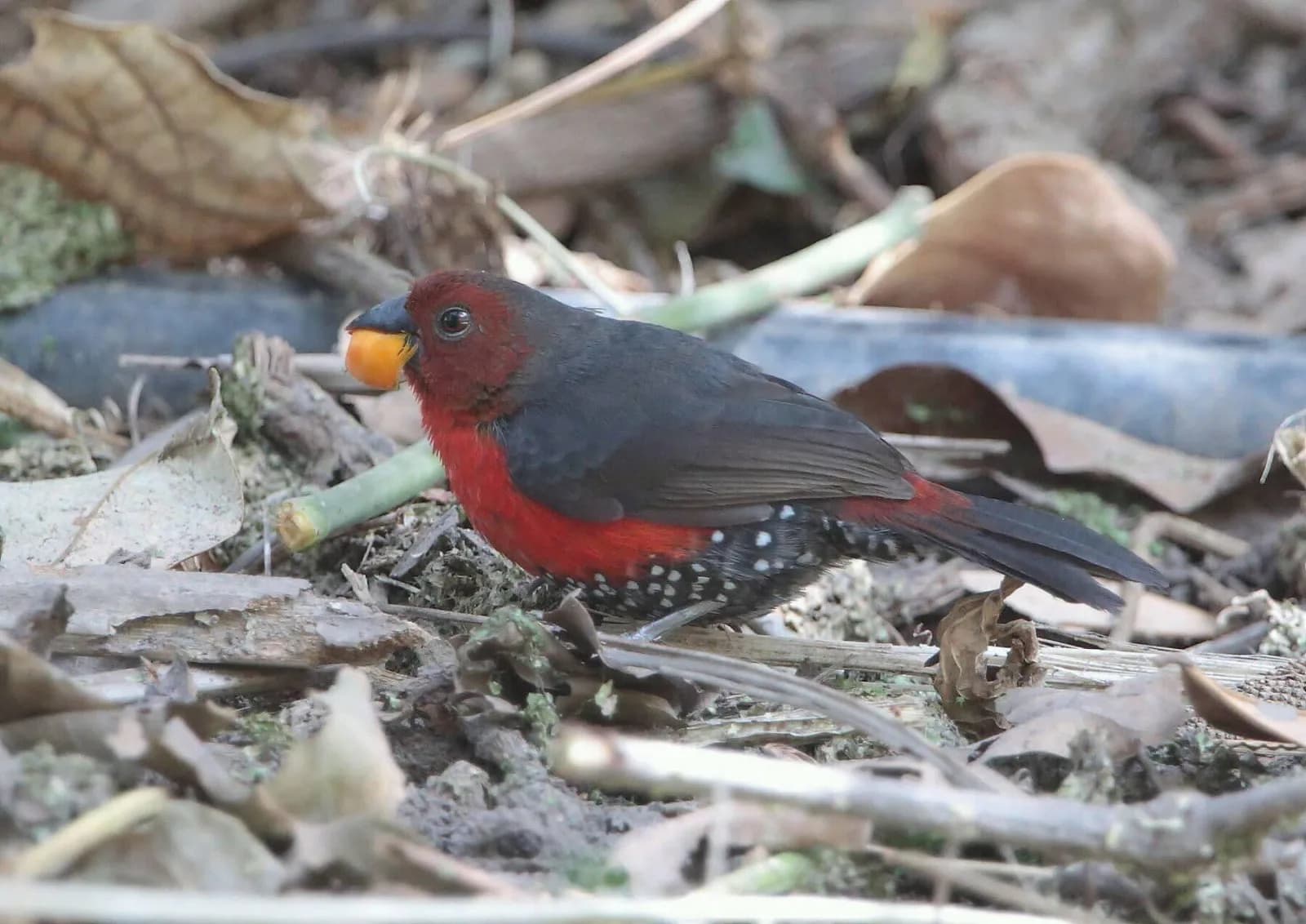
Western Bluebill

Western Bluebill

Spermophaga haematina

A chunky, red-and-black finch of forest undergrowth. It is skulking and hard to see, which makes a good view a satisfying find.

Where: Abuko Nature Reserve.
When: Resident all year.

Long-tailed Nightjar

Caprimulgus climacurus

A slim nightjar with a long streaming tail, found roosting by day on bare ground at dusk and dawn. Brufut Woods is one of the best-known places for it, and a guide can find it for you.

Where: Brufut Woods and other open scrub.
When: Year-round resident, breeding March to September in Gambia and Senegal.

Families to look out for

Kingfishers

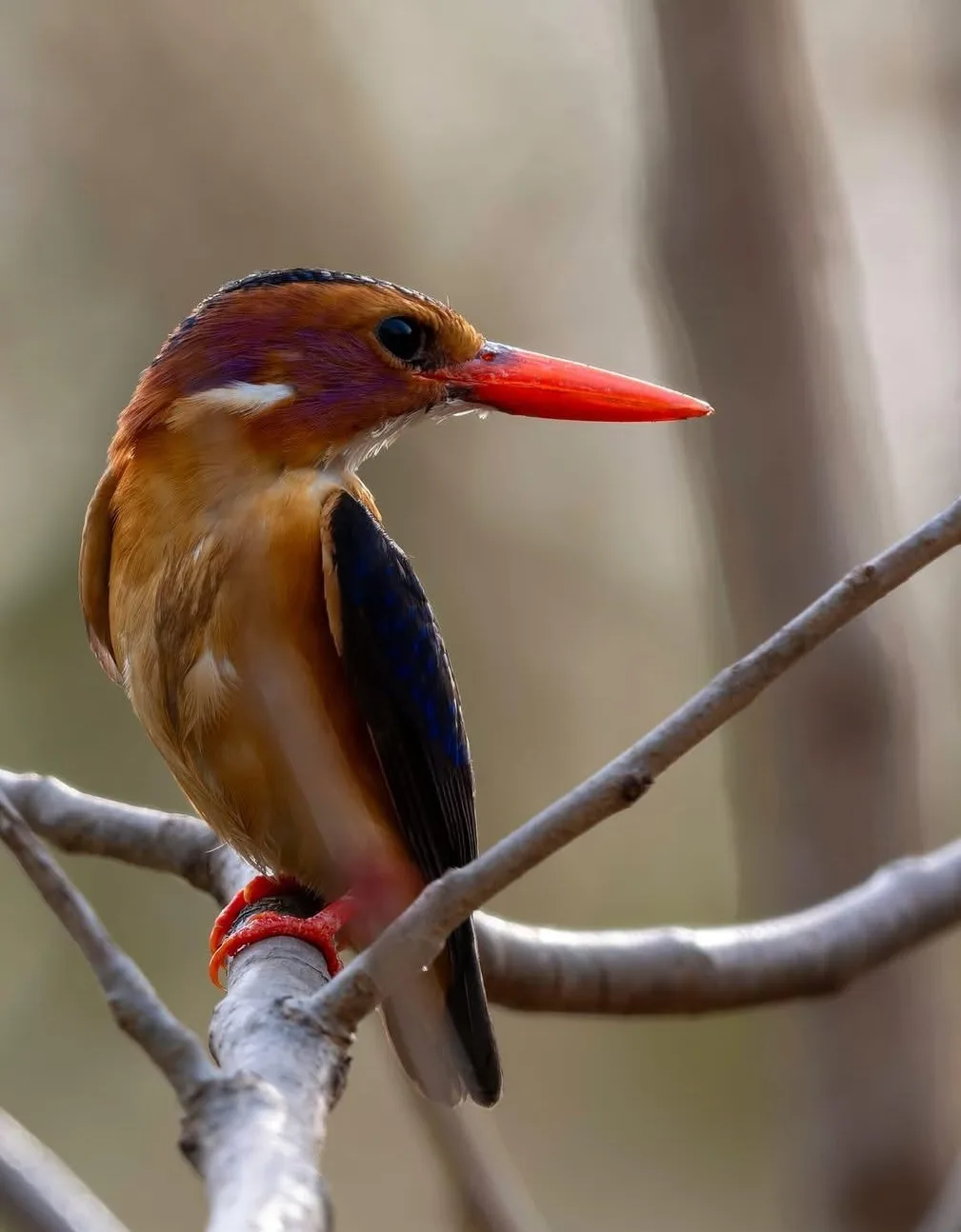
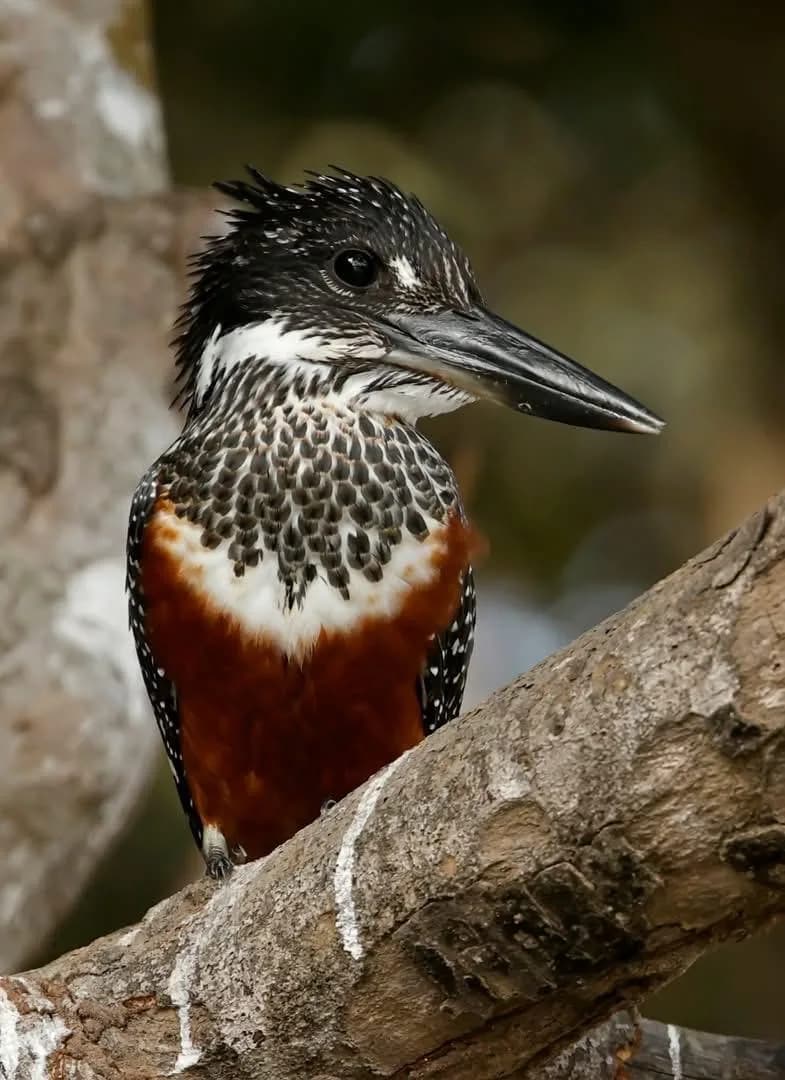
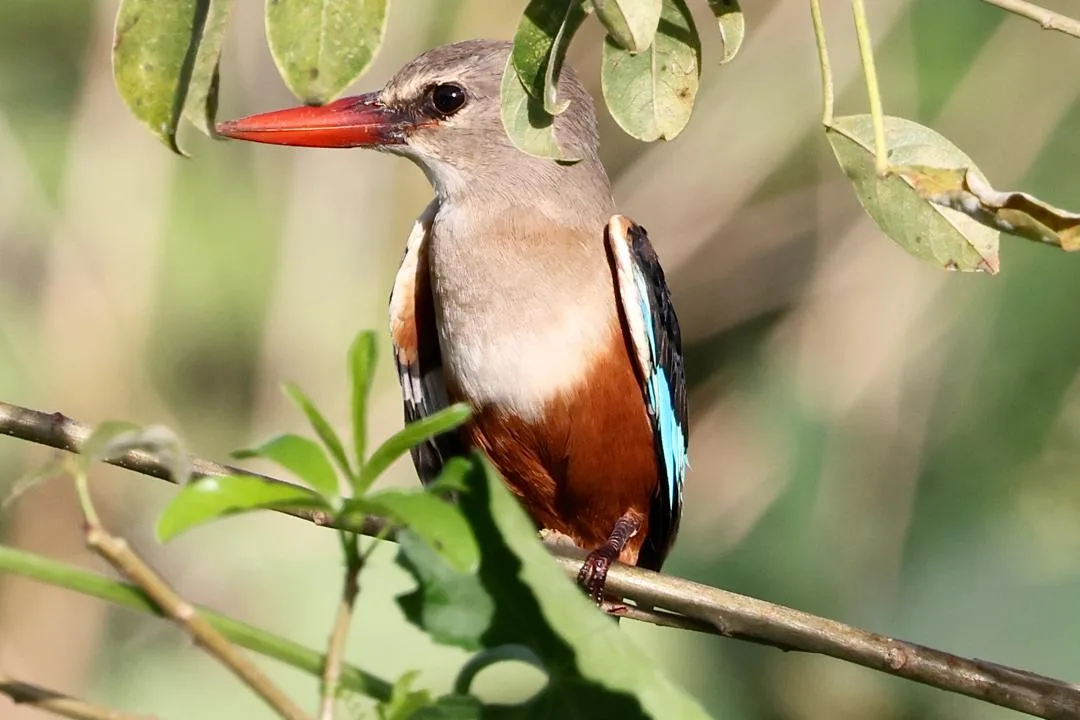
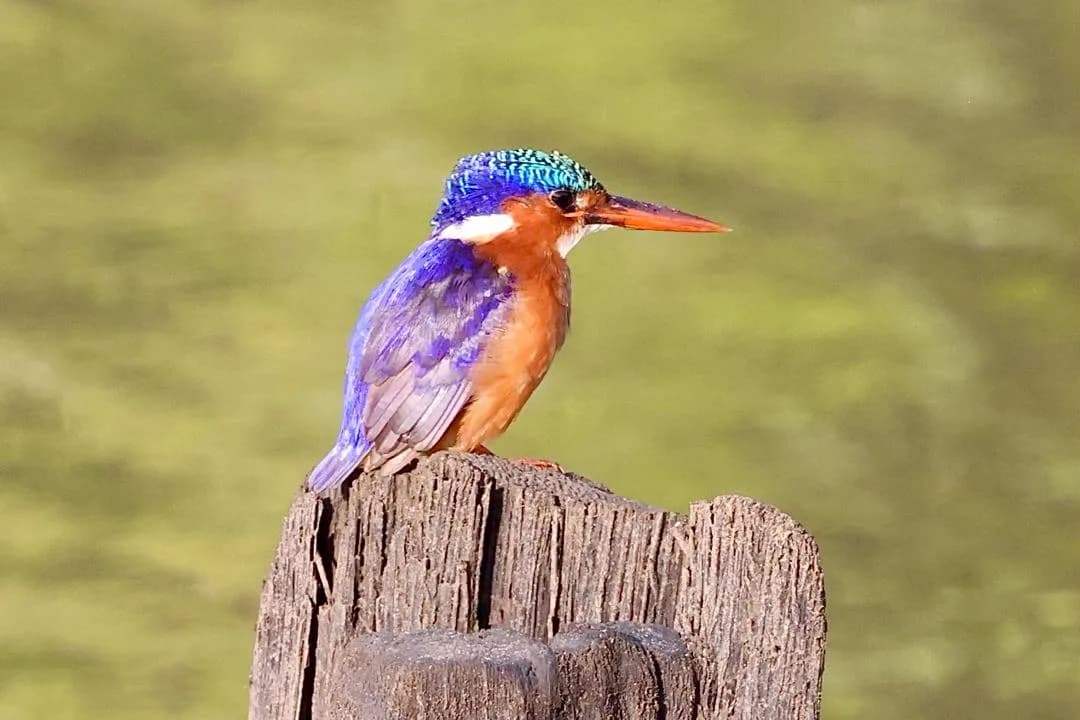
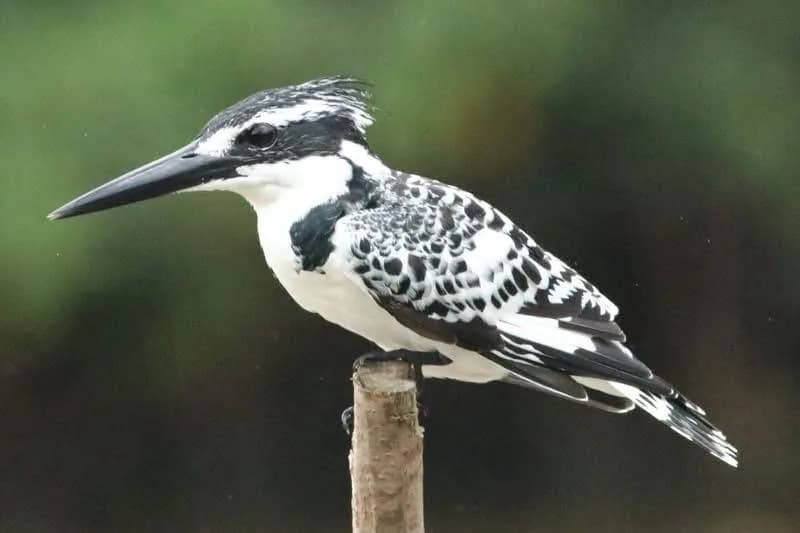
The Gambia has everything from the tiny African Pygmy Kingfisher in forest leaf-litter to the huge Giant Kingfisher on the creeks, with Pied, Malachite, Blue-breasted and Grey-headed in between. Several are easy to see, and the river and creeks are the best places.

Bee-eaters

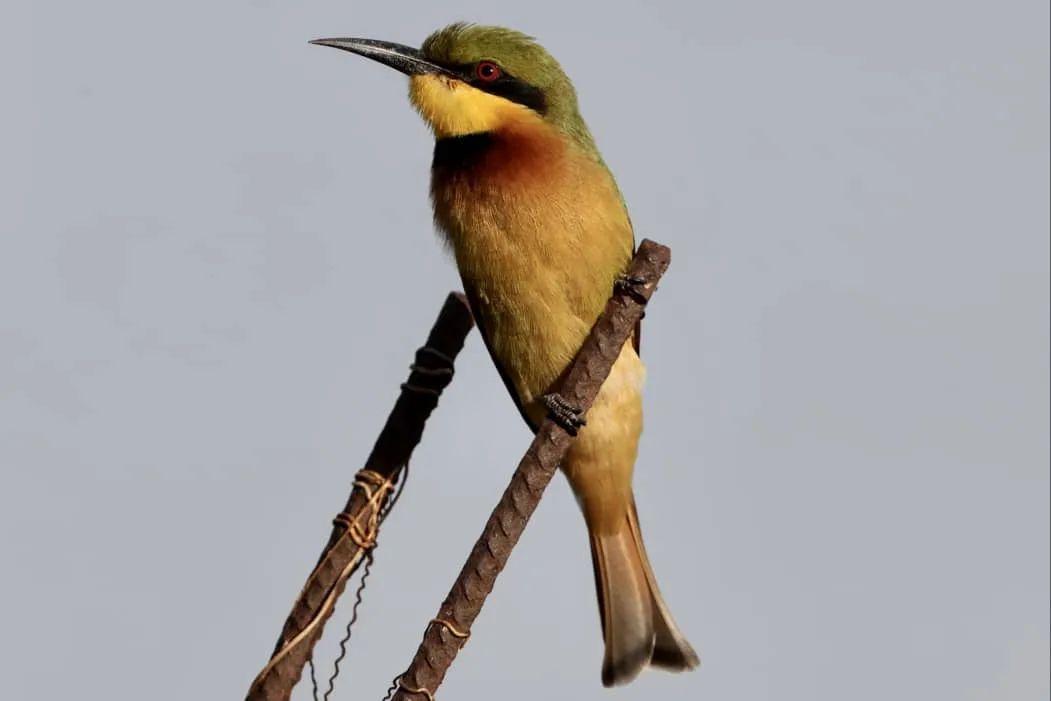
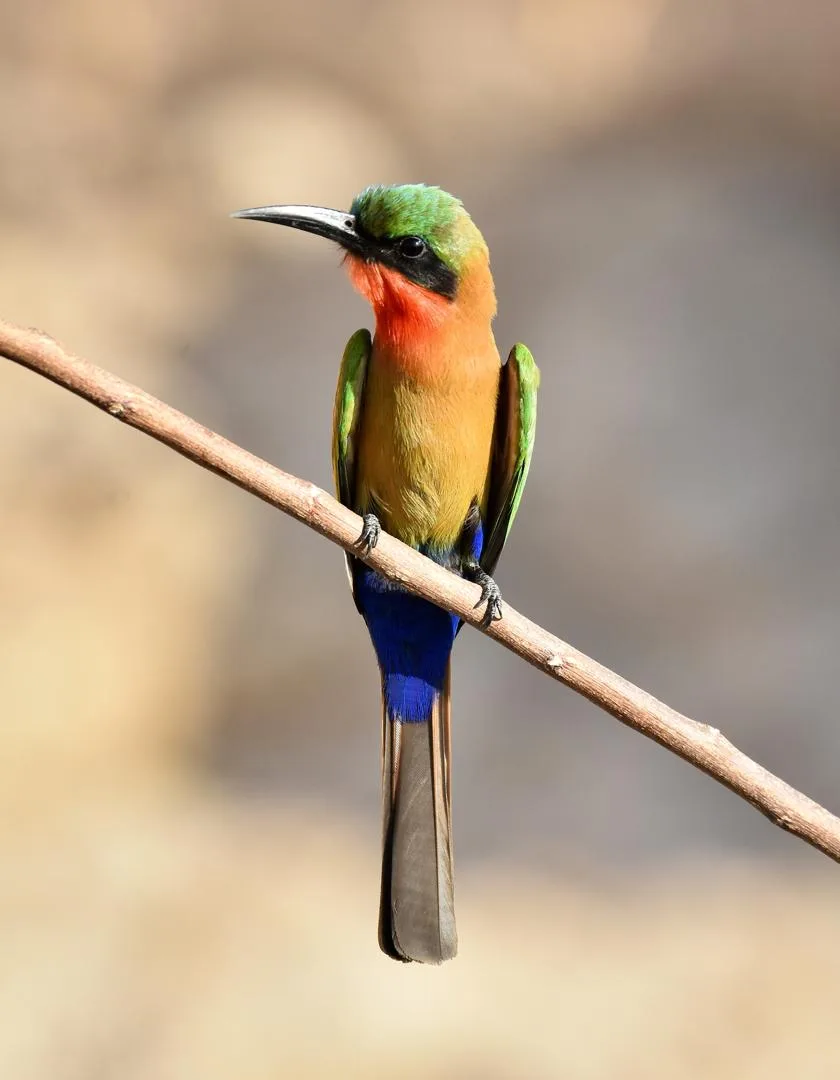
Little and Red-throated Bee-eaters are resident and easy to enjoy, with Red-throated colonies at burrows such as Bansang quarry. Northern Carmine Bee-eater is the dry-season showpiece.

Sunbirds

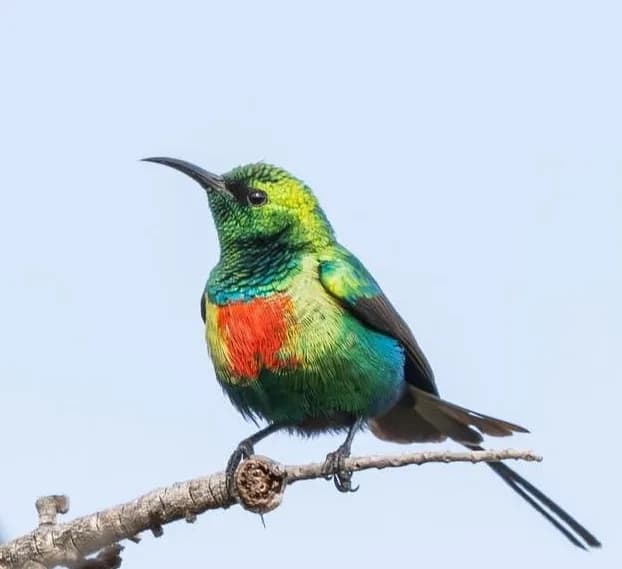
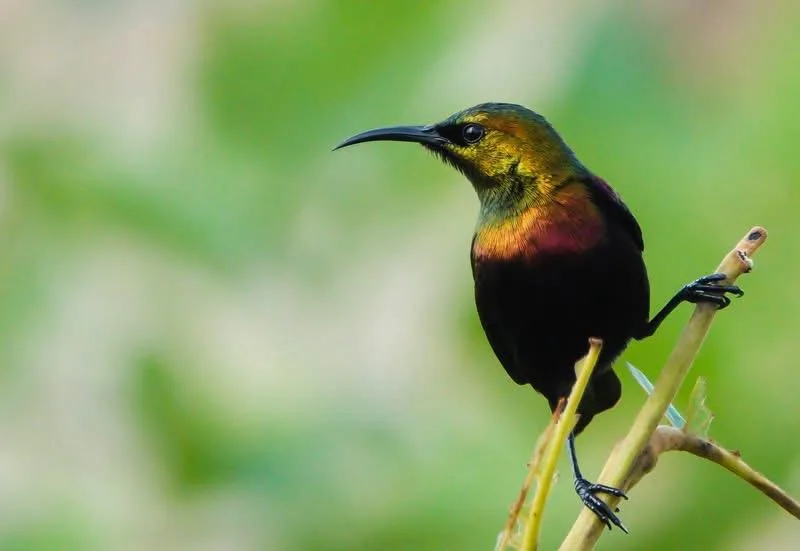
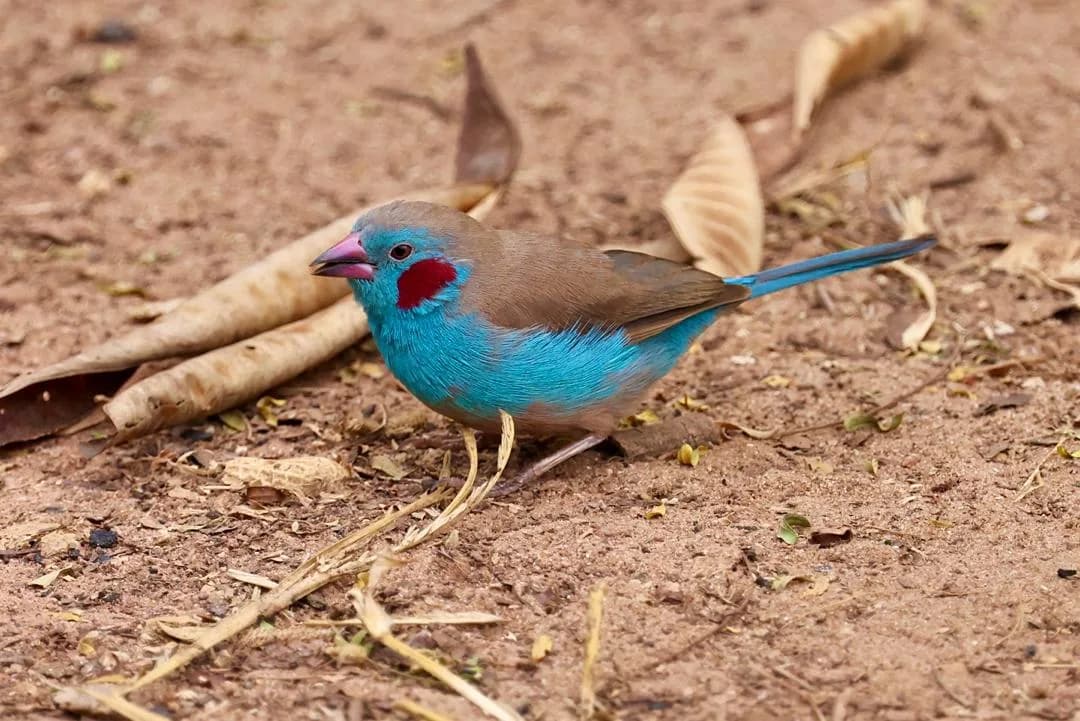
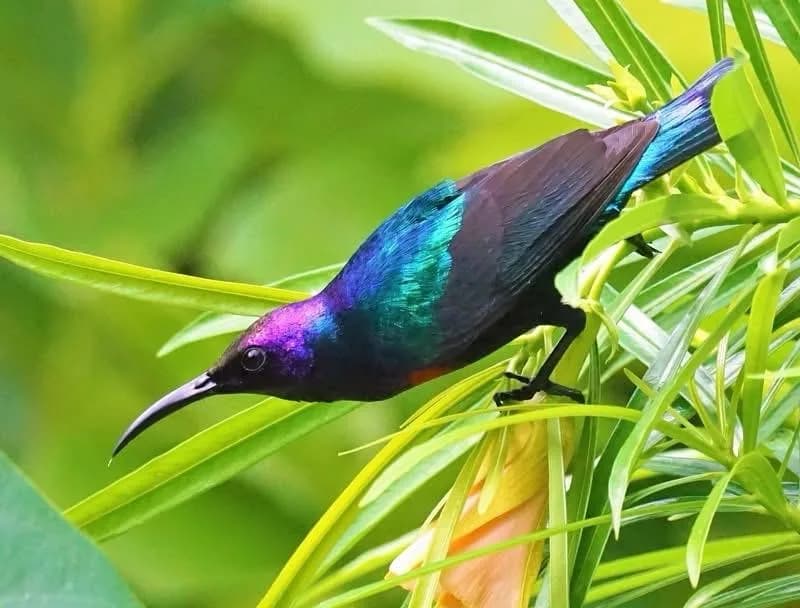
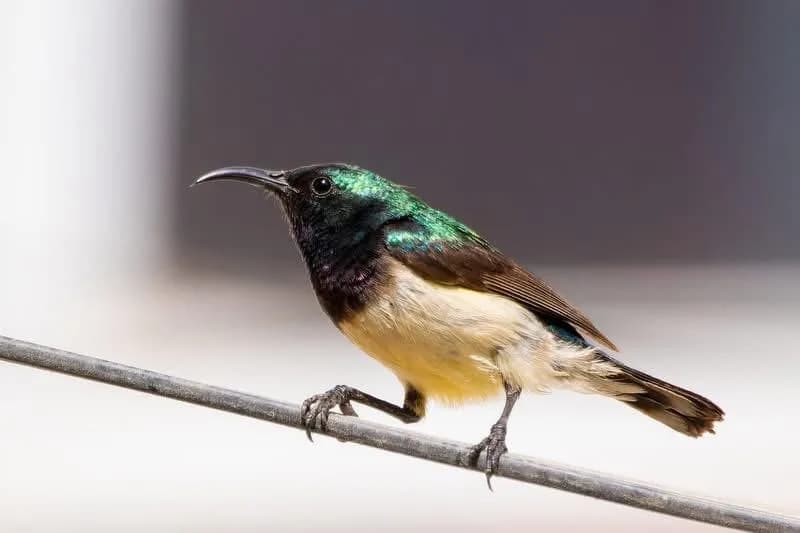
Six species in the gardens, mangroves and oil-palm country show how varied the family is, from the Mangrove Sunbird to the Splendid and Beautiful Sunbirds. Most are resident and easy to see around flowering shrubs.

Eagles and raptors

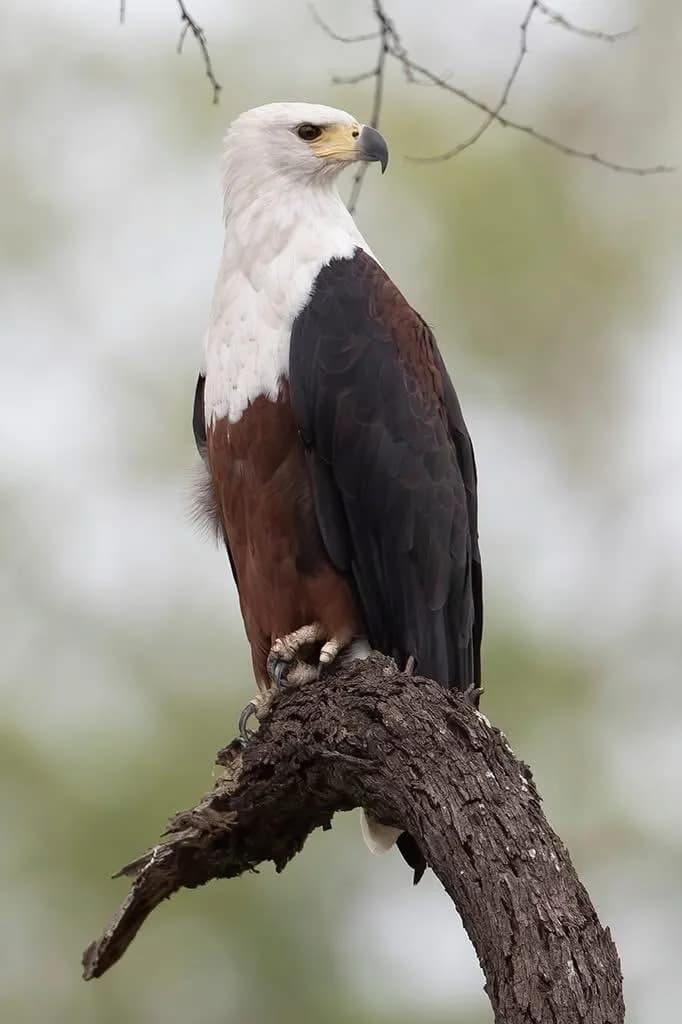
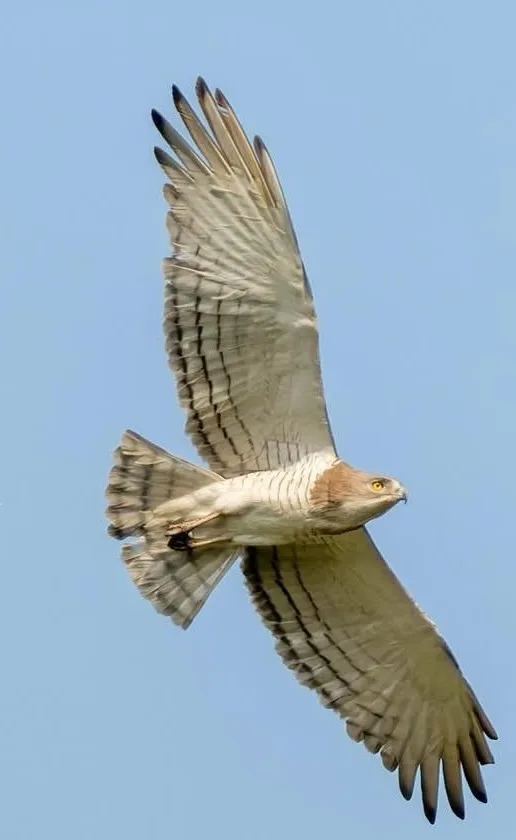
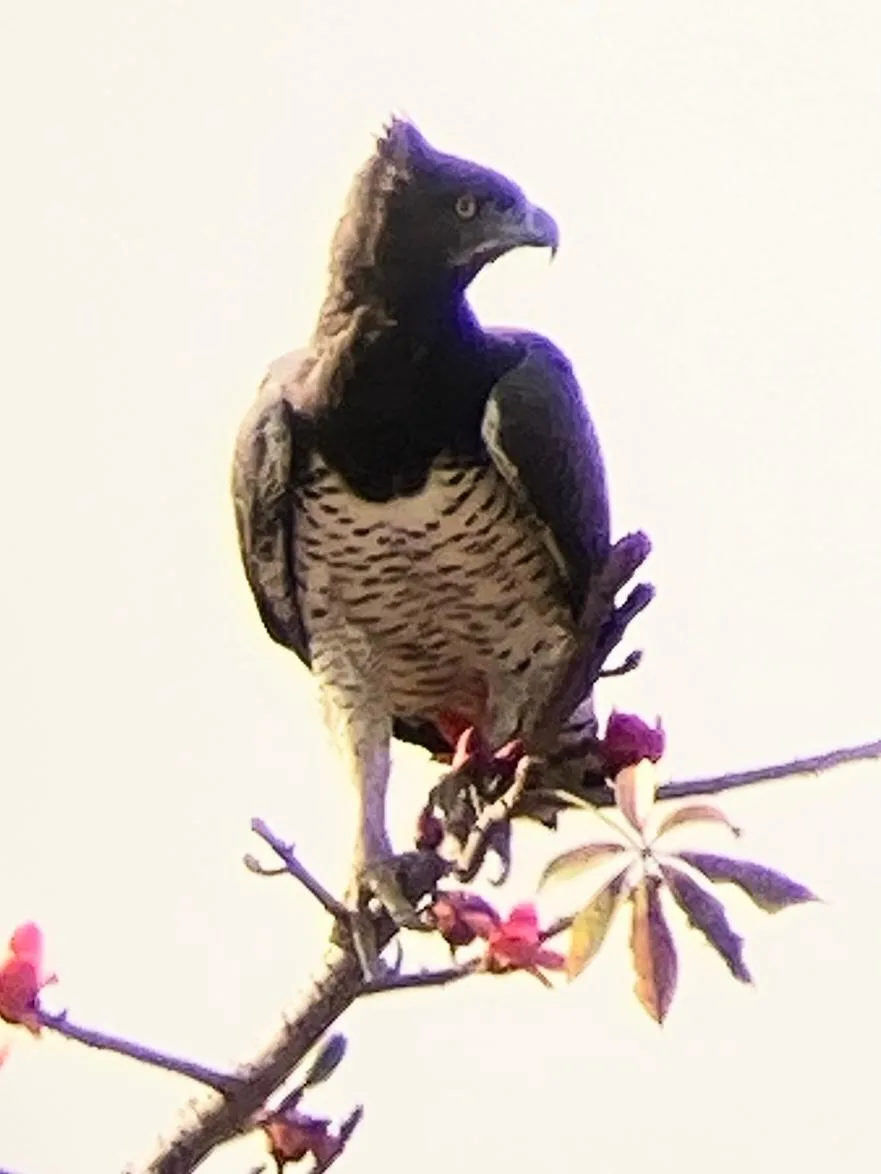
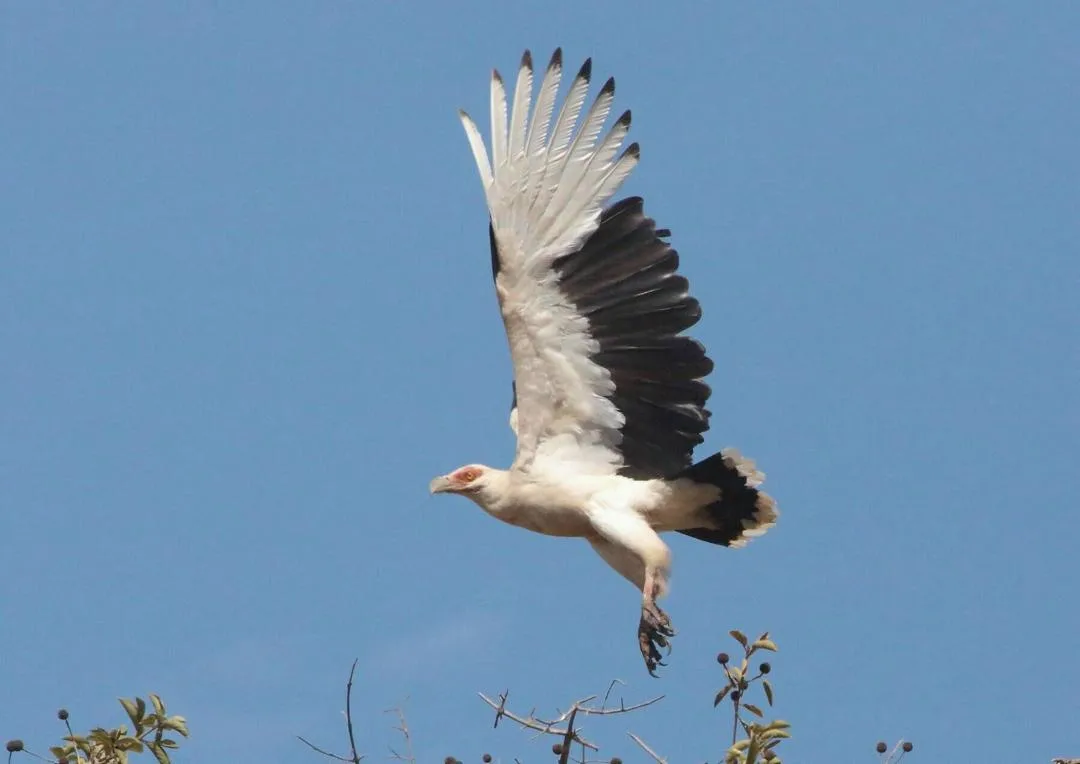
Kiang West is the place for raptors, with Bateleur and Martial Eagle (both Endangered) and Beaudouin's Snake Eagle (Vulnerable) all listed as species of global concern in The Gambia's range. African Fish Eagle and Palm-nut Vulture are easy anywhere on the coast and river.

Owls

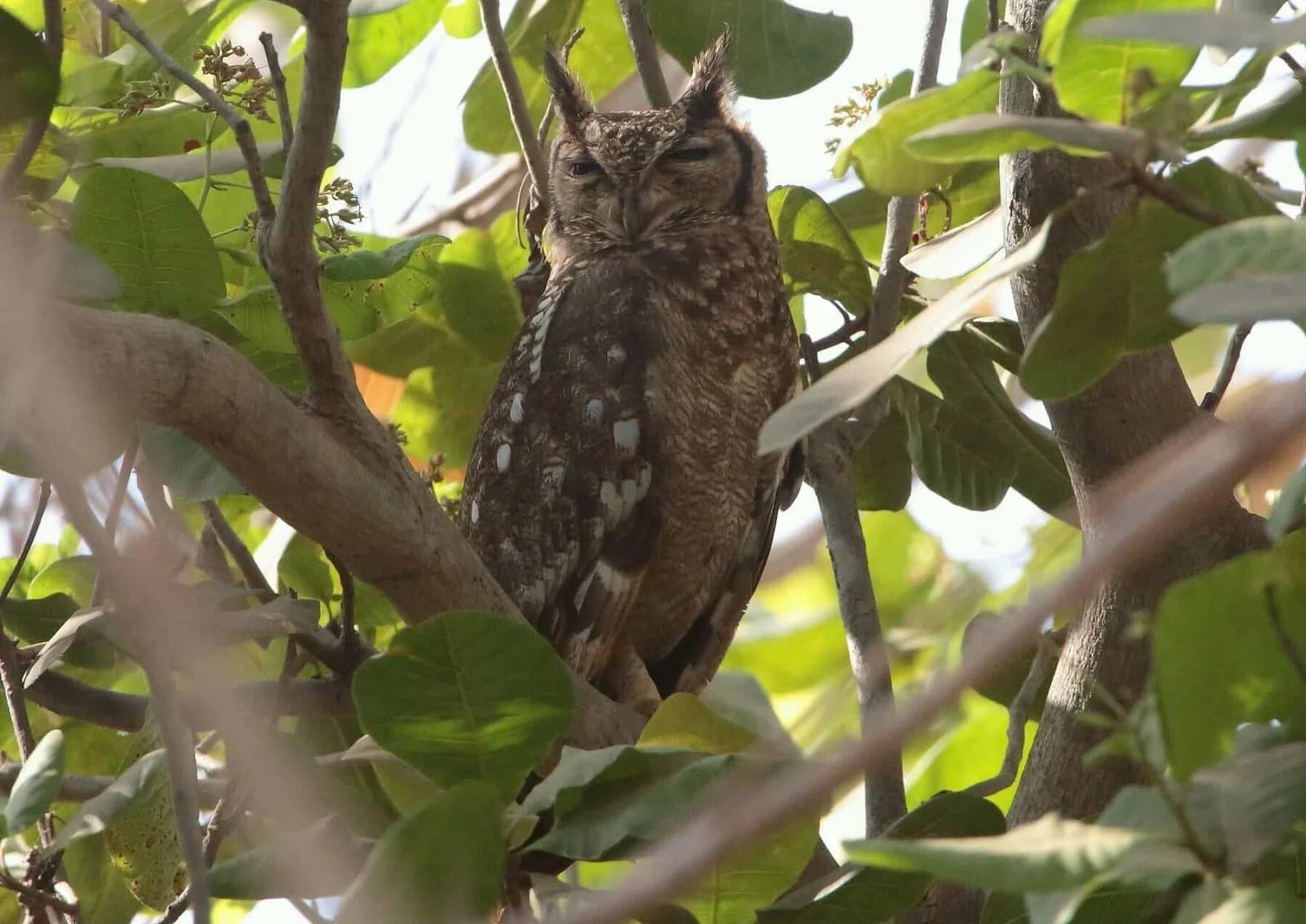
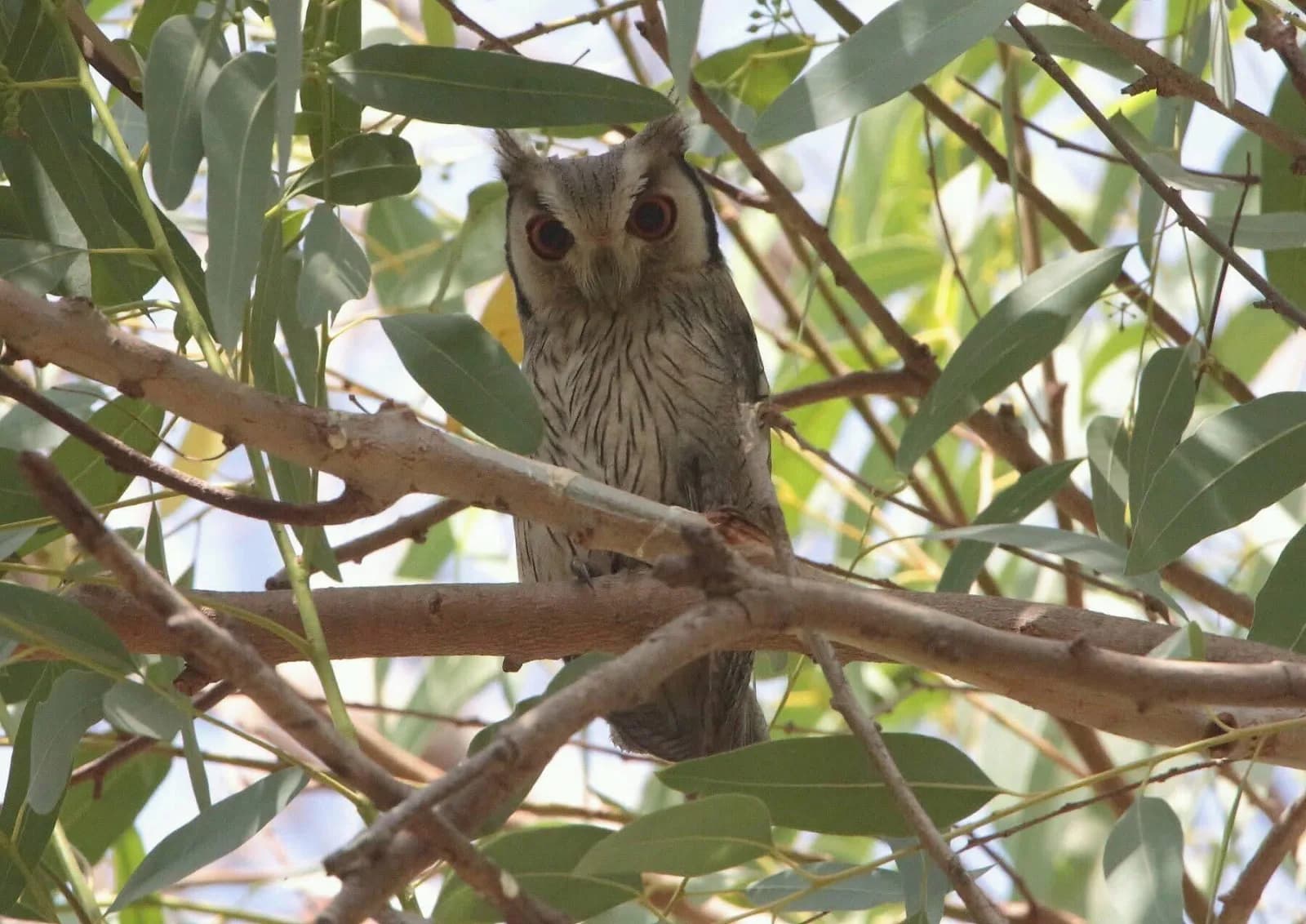
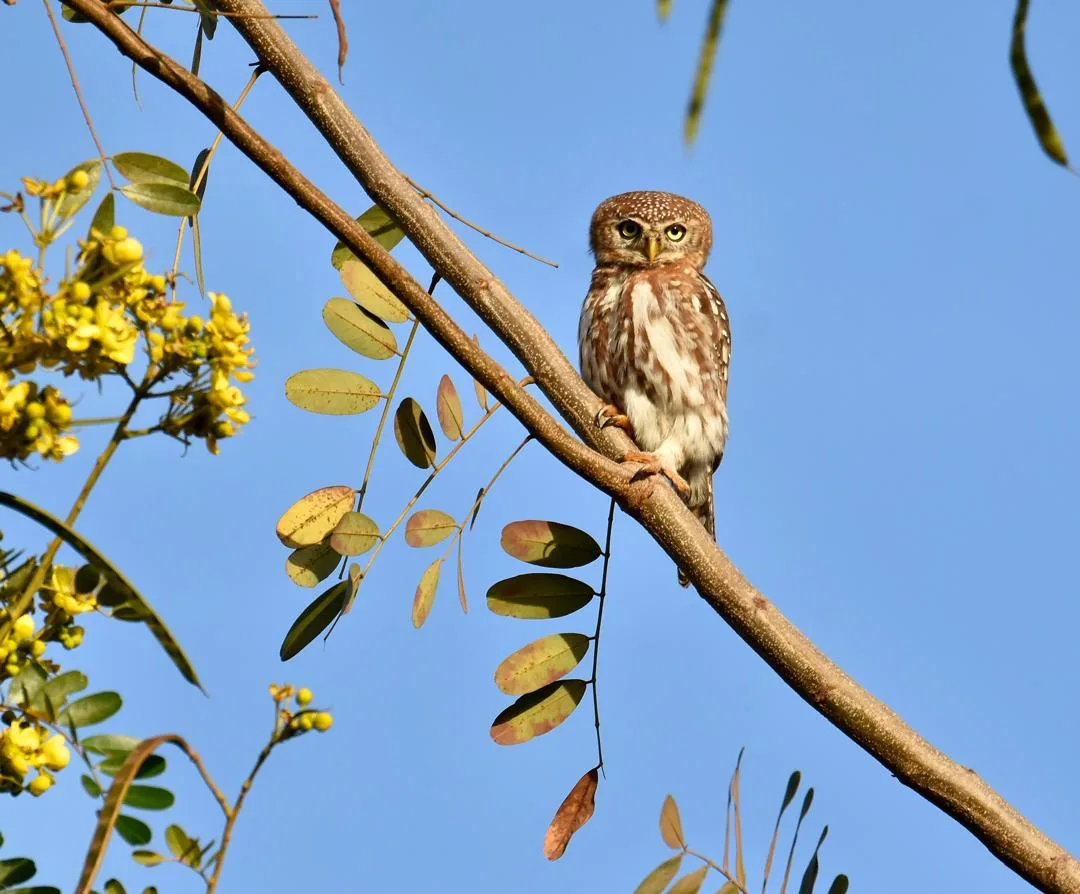
Brufut Woods and nearby sites are well known for owls, where a guide can help you find roosting Northern White-faced Owls and Pearl-spotted Owlets. Greyish Eagle-Owl breeds in The Gambia, with records from Kiang West.

Turacos and starlings

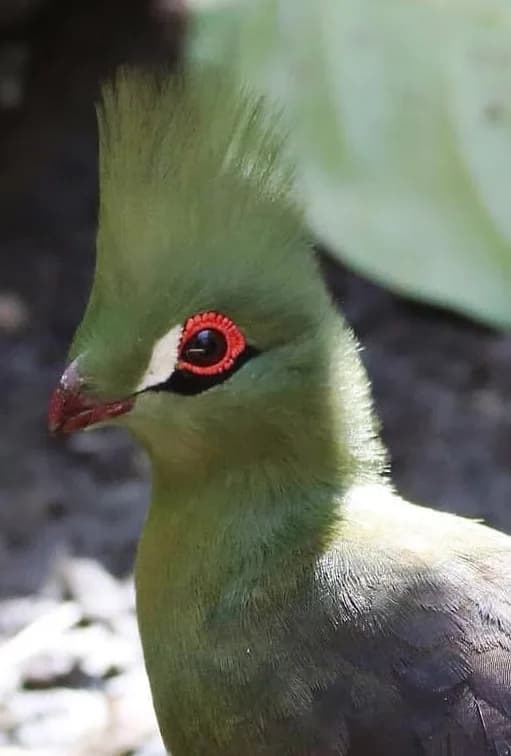
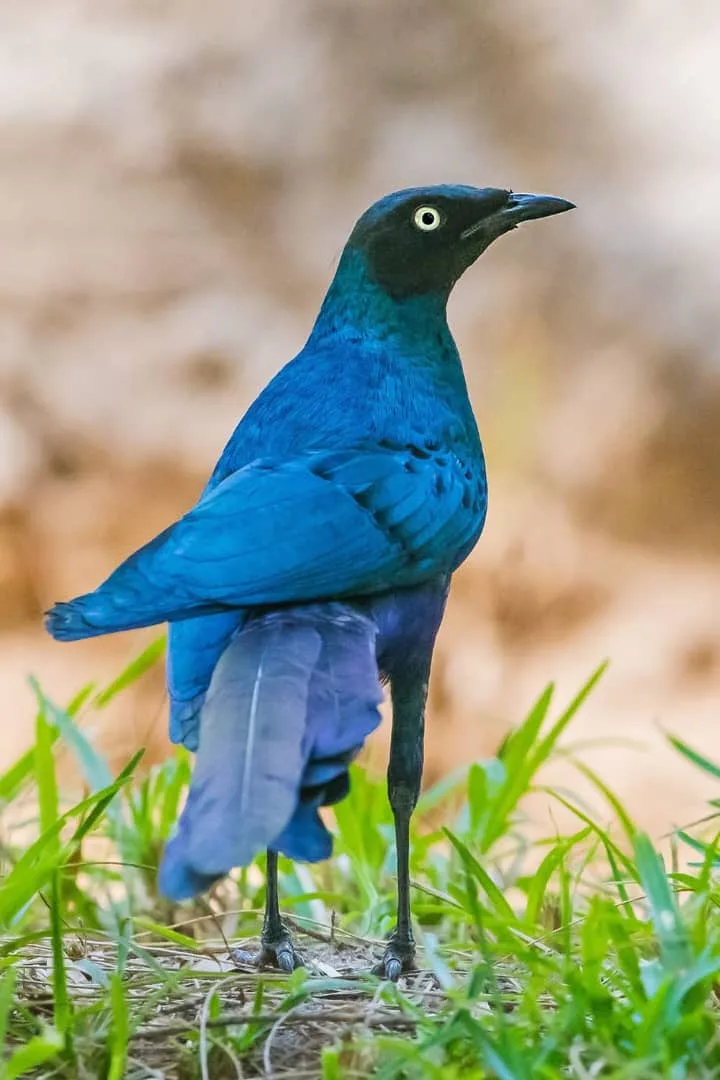
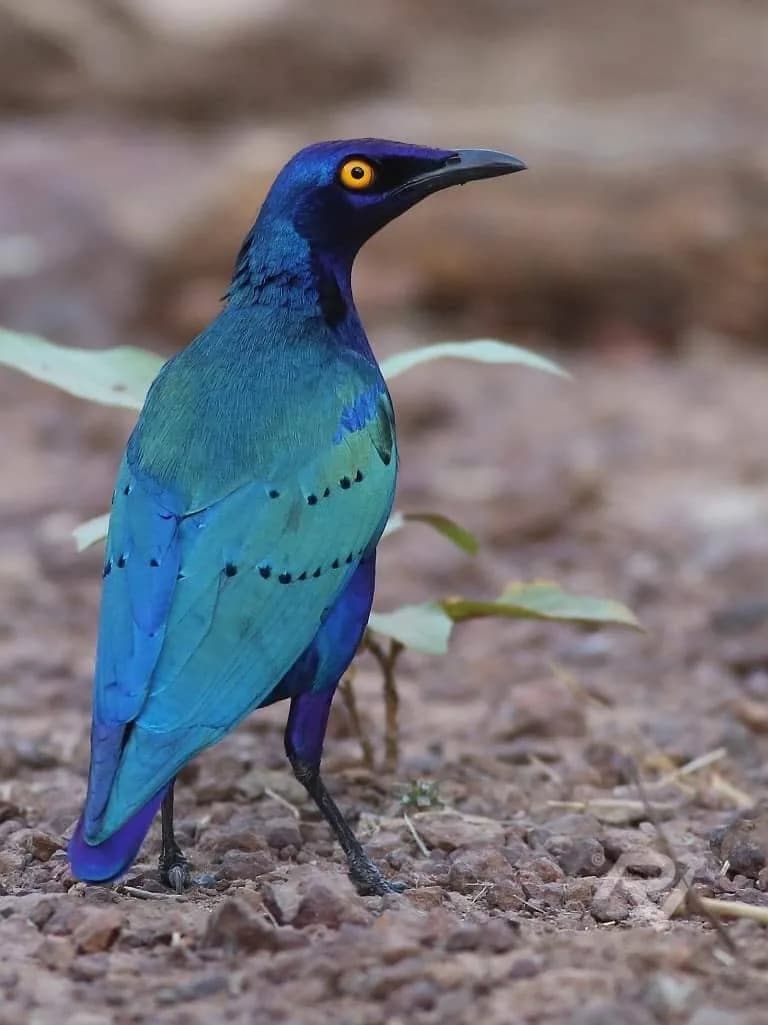
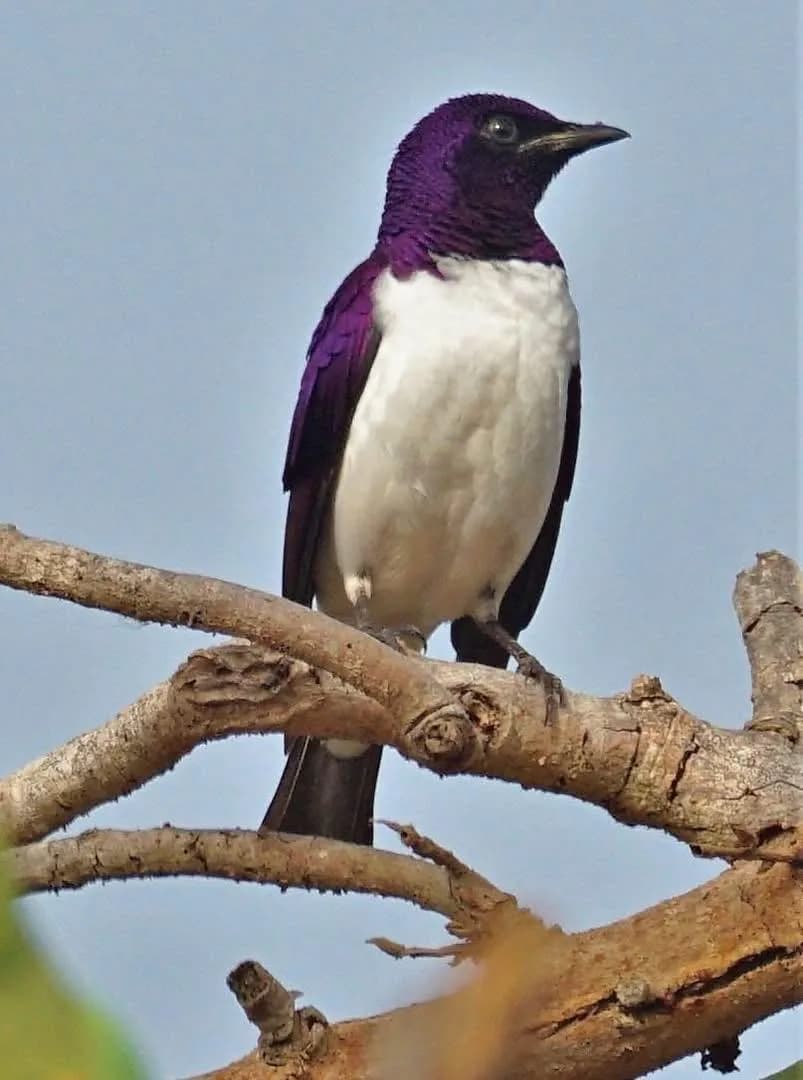
Green and Violet Turacos are easy to enjoy at Abuko, and three glossy starlings, Long-tailed, Purple and Violet-backed, add iridescent colour in gardens and woodland.

What a birding trip here is like

How many species in a week?

Operator itineraries commonly expect 220 to 260 species over about nine days, and a January trip with a guide recorded just under 250 across a week-long Gambia and Senegal itinerary. A longer, upriver route can go beyond that, and the site's own 15-day itinerary says around 300 are possible depending on season. These are typical rather than guaranteed.
A typical day

Birding is best in the cooler early morning and late afternoon, with a rest at midday when it is hot. Operator schedules use most of the 7am to 6pm daylight hours, split by lunch. A boat trip, a night walk for owls or nightjars and a forest morning can all fit into a week.

Add Senegal for even more

The Gambia is surrounded by Senegal on three sides, which holds species scarce or absent in The Gambia, such as Sahelian birds, the Scissor-tailed Kite colony and Niokolo-Koba's Egyptian Plover. Yaya runs two tours that cross the border, covering the Saloum Delta and Eastern Senegal.

Why a local guide matters

Many of The Gambia's best birds, such as roosting owls, nightjars, finfoot and Pel's Fishing Owl, are found with local knowledge rather than by chance. Licensed Gambian guides are represented by the Bird Watchers' Association, which works with the Gambia Tourism Board, and a guide is strongly recommended at Brufut Woods.

See Yaya's itineraries

Some of The Gambia's most popular birds

A two-week tour with Yaya can turn up around 300 species. These are some of the favourites, photographed by Yaya in the field, with more being added. Filter by group or by park, then tap a species for where to find it and which itineraries visit its habitat.

Showing 42 of 42 species

Abyssinian Ground Hornbill

Bucorvus abyssinicus

Vulnerable
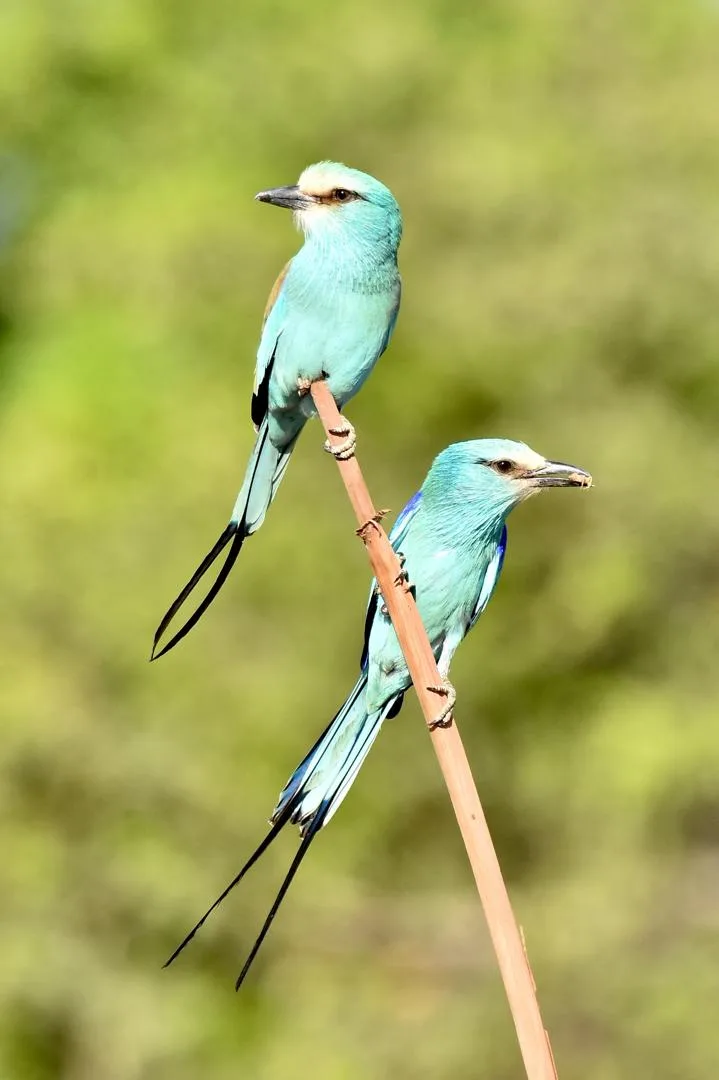
Abyssinian Roller

Coracias abyssinicus

Least Concern
African Finfoot

Podica senegalensis

Least Concern
African Fish Eagle

Haliaeetus vocifer

Least Concern
African Pygmy Kingfisher
Least Concern
Bateleur

Terathopius ecaudatus

Endangered
Beaudouin's Snake Eagle

Circaetus beaudouini

Vulnerable
Beautiful Sunbird

Cinnyris pulchellus

Least Concern
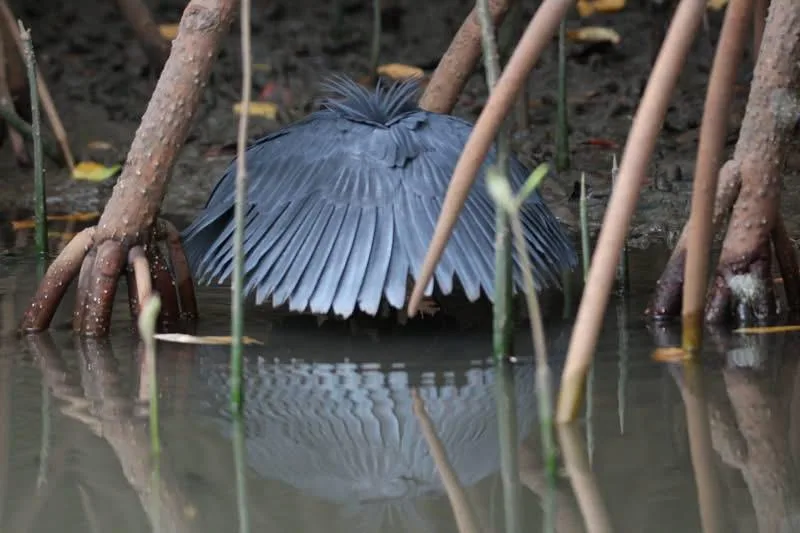
Black Heron

Egretta ardesiaca

Least Concern
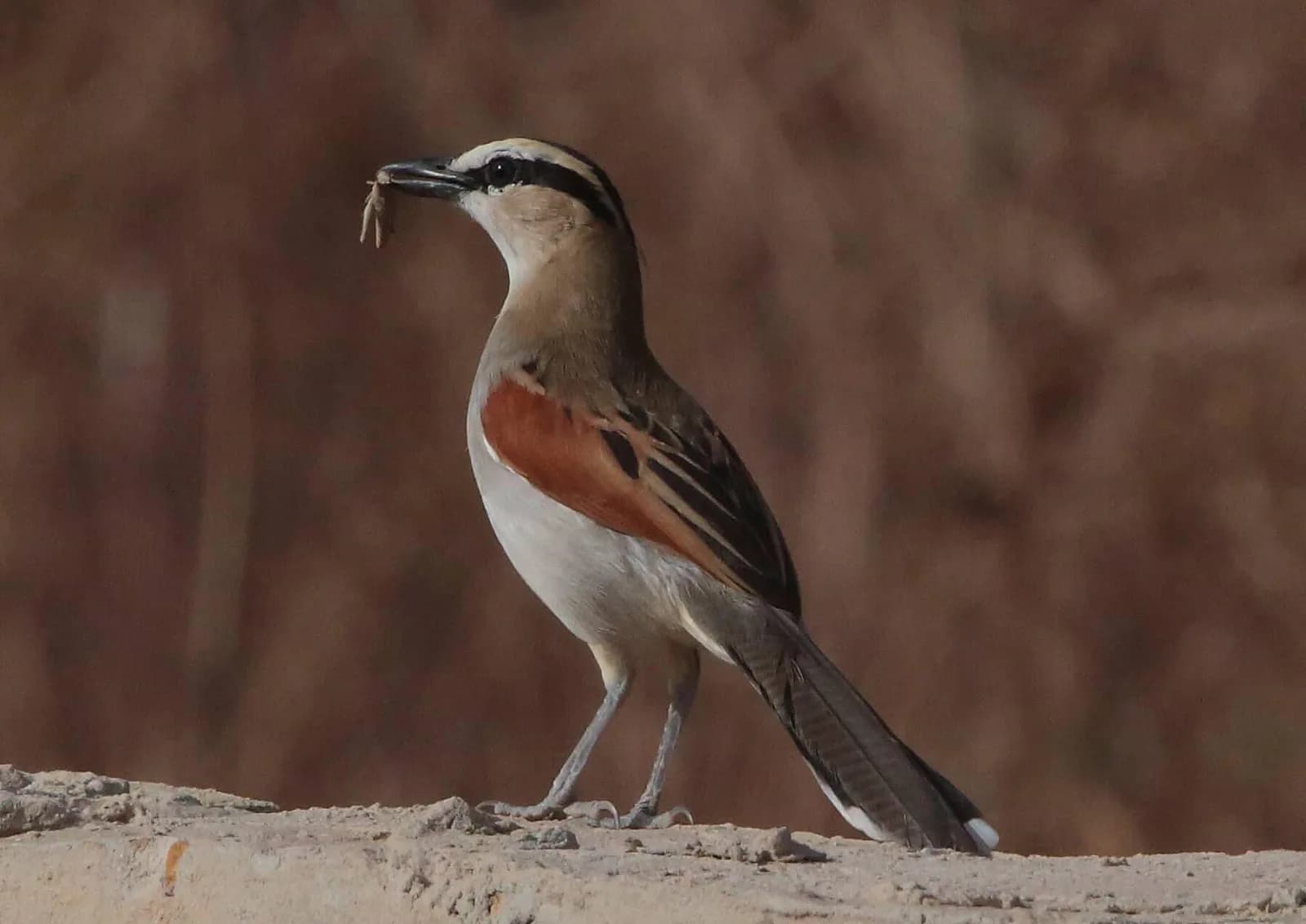
Black-crowned Tchagra

Tchagra senegalus

Least Concern
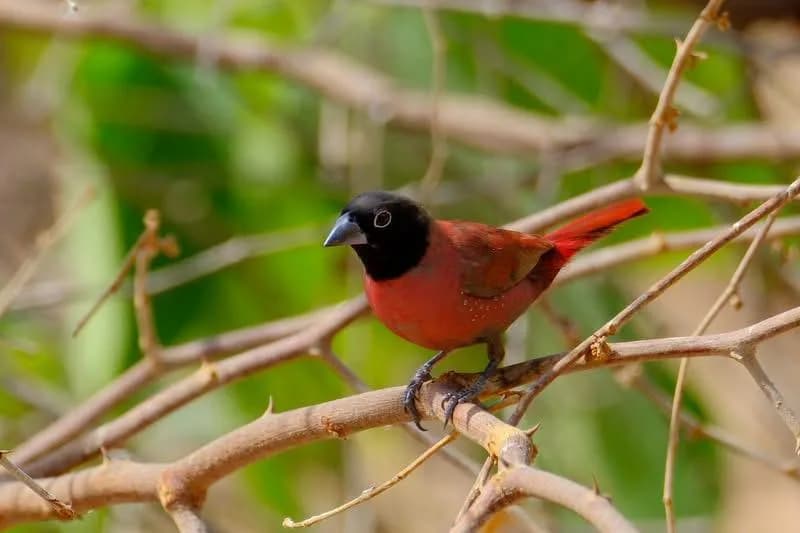
Black-faced Firefinch

Lagonosticta larvata

Least Concern
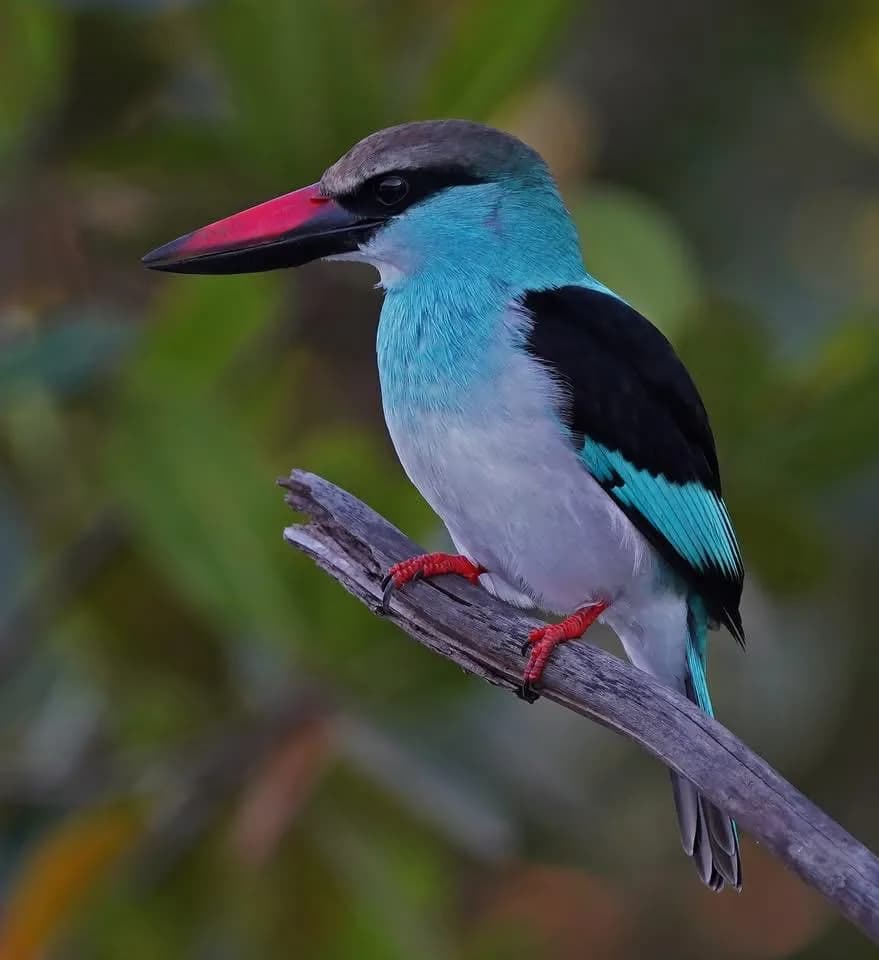
Blue-breasted Kingfisher

Halcyon malimbica

Least Concern
Copper Sunbird

Cinnyris cupreus

Least Concern
Egyptian Plover

Pluvianus aegyptius

Least Concern
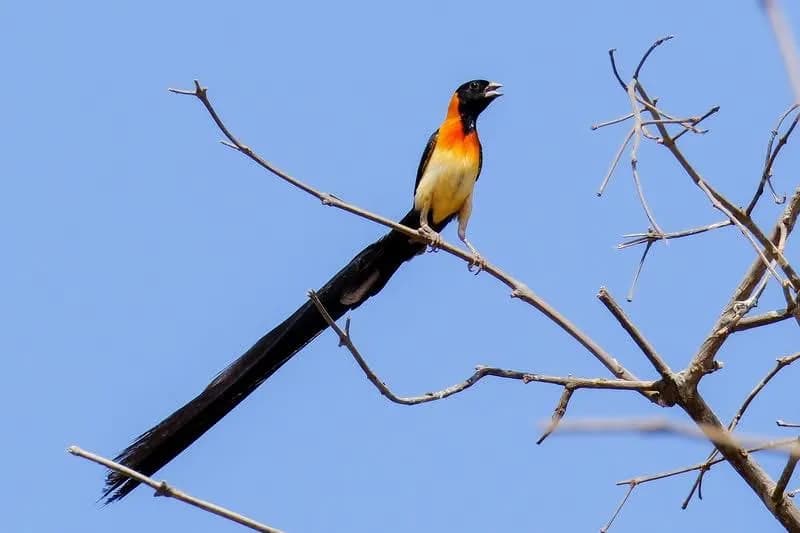
Exclamatory Paradise Whydah
Least Concern
Giant Kingfisher

Megaceryle maxima

Least Concern
Green Turaco

Tauraco persa

Least Concern
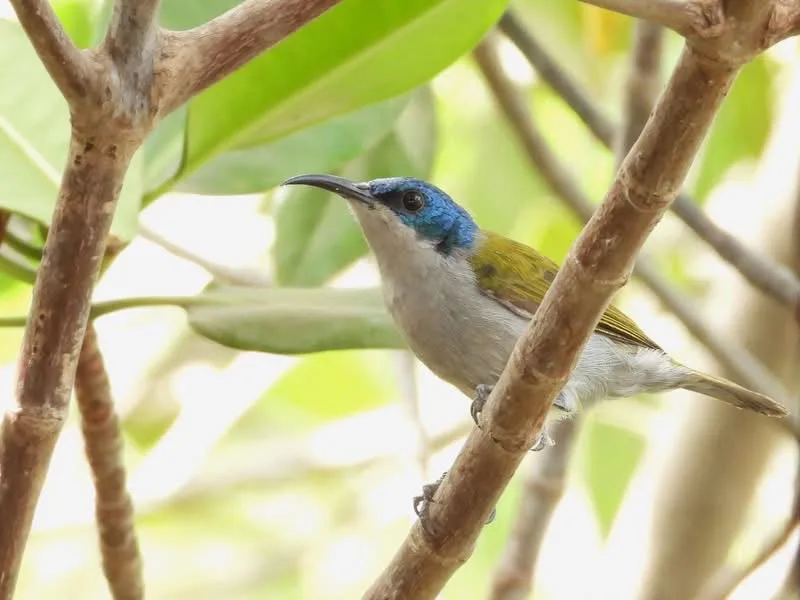
Green-headed Sunbird

Cyanomitra verticalis

Least Concern
Grey-headed Kingfisher

Halcyon leucocephala

Least Concern
Greyish Eagle-Owl

Bubo cinerascens

Least Concern
Little Bee-eater

Merops pusillus

Least Concern
Long-tailed Glossy Starling

Lamprotornis caudatus

Least Concern
Malachite Kingfisher

Corythornis cristatus

Least Concern
Mangrove Sunbird

Anthreptes gabonicus

Least Concern
Martial Eagle

Polemaetus bellicosus

Endangered
Northern Carmine Bee-eater
Least Concern
Northern White-faced Owl

Ptilopsis leucotis

Least Concern
Palm-nut Vulture

Gypohierax angolensis

Least Concern
Pearl-spotted Owlet

Glaucidium perlatum

Least Concern
Pied Kingfisher

Ceryle rudis

Least Concern
Purple Starling

Lamprotornis purpureus

Least Concern
Red-cheeked Cordon-bleu

Uraeginthus bengalus

Least Concern
Red-throated Bee-eater
Least Concern
Splendid Sunbird

Cinnyris coccinigastrus

Least Concern
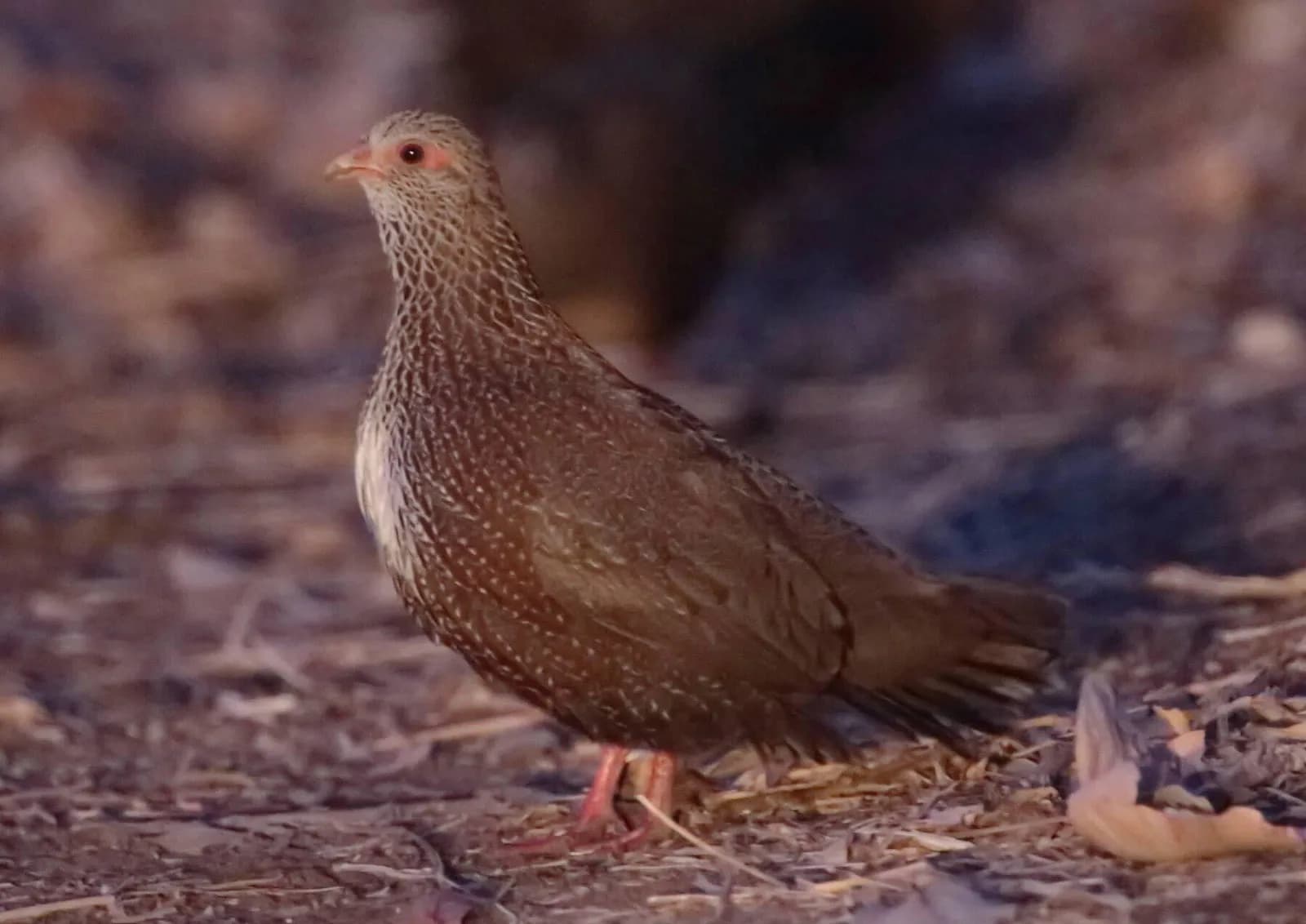
Stone Partridge

Ptilopachus petrosus

Least Concern
Variable Sunbird

Cinnyris venustus

Least Concern
Violet Turaco

Musophaga violacea

Least Concern
Violet-backed Starling

Cinnyricinclus leucogaster

Least Concern
Western Bluebill

Spermophaga haematina

Least Concern
White-backed Night Heron

Gorsachius leuconotus

Least Concern
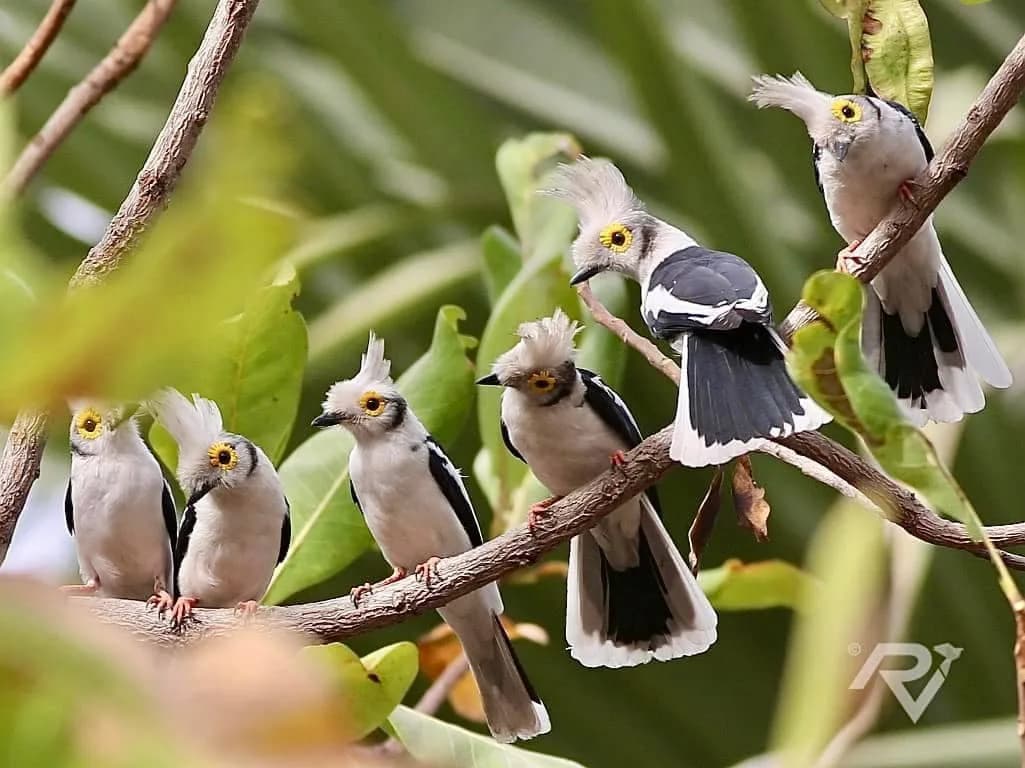
White-crested Helmetshrike
Least Concern
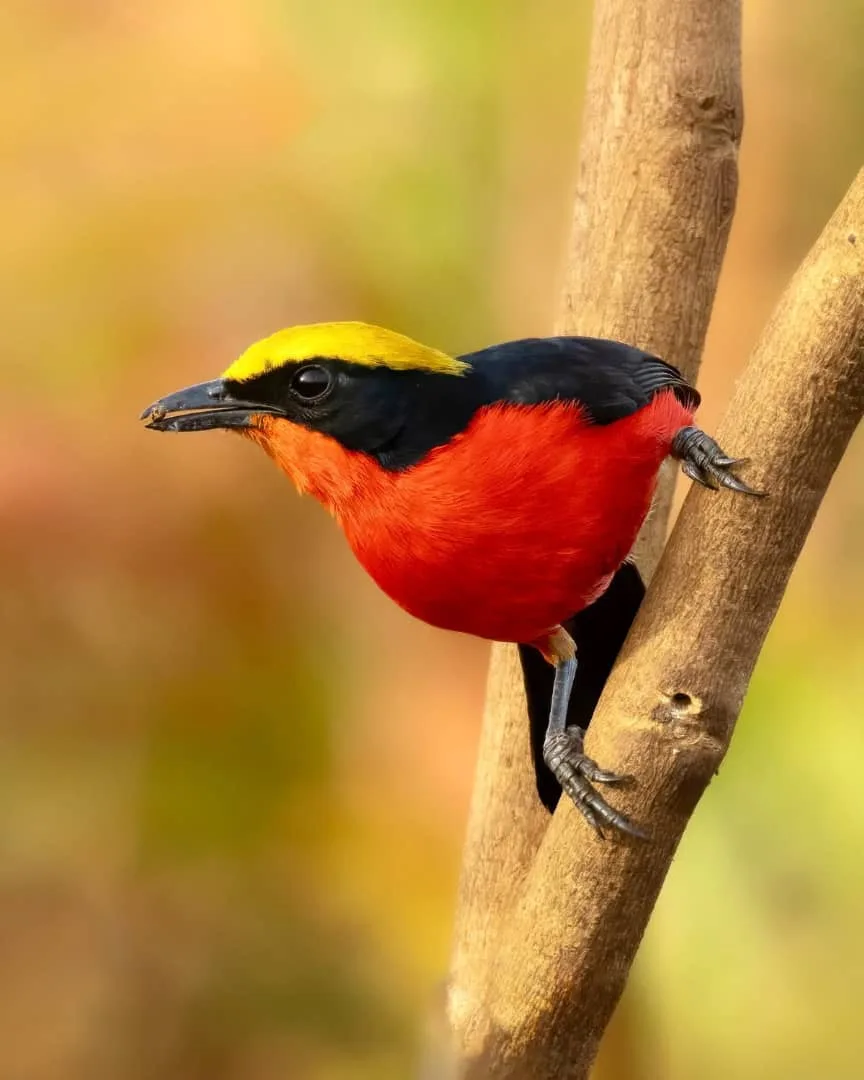
Yellow-crowned Gonolek

Laniarius barbarus

Least Concern

Ask Yaya about birding in The Gambia

Tell Yaya which birds or months you have in mind and he'll reply directly.
Sources for this guide (50)