Birds for beginners
Birdwatching in The Gambia for Beginners: Your First-Timer's Guide
You don't need experience, expensive kit or a long flight to start. Here's what to expect from your first birding trip to The Gambia.
By Yaya's Birding Tours · Reviewed by Yaya Barry · · 8 min read
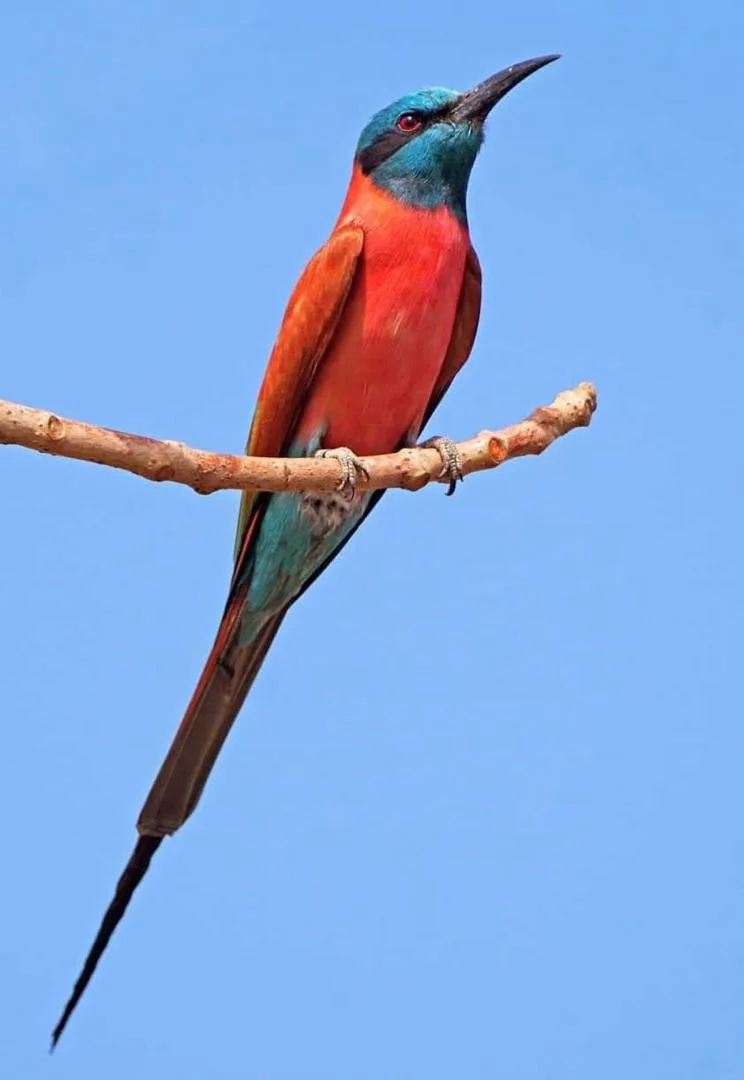
Picture a small West African country where kingfishers, bee-eaters and turacos are part of an ordinary morning walk. That is birdwatching in The Gambia. It is English-speaking, compact and close to Europe, and one UK birding company calls it “one of the best introductions to both tropical birding and Africa”.[5]
This guide is written for people who have never been on a birding trip. It explains what you will actually see, which kinds of places to visit, when to go and what a normal day looks like. It also covers how a local guide fits in, because that is often the difference between a nice walk and a trip you remember for years.
Key takeaways
- The Gambia is under 50 km wide yet has a checklist of 621 bird species, so you spend your time birding rather than travelling.[1][2]
- Many Gambian birds are big, bright and noisy, which makes them easier for a beginner to spot.[3]
- November to March is the classic season, but birding is good all year round, and each season simply offers a different mix of birds.[4]
- Days follow a simple rhythm: birding in the cool of the early morning and late afternoon, with a rest in the heat of midday. A local guide takes care of the finding and identifying.[5]
Why The Gambia suits first-time birders
Start with the size. The Gambia is the smallest country on the African mainland and is less than 50 kilometres wide at its widest point.[2] It follows one river, so the forests, creeks, beaches and savanna you want to visit are linked by a single road network. For a beginner that matters, because a short drive means more time watching birds and less time staring out of a minibus window.
Then there is the language and the journey. English is the country's sole official language,[2] and the flight from London takes about six and a half hours when flown direct.[6] One UK tour operator advertises direct flights and no time difference for its November departures, so there is no jet lag to recover from.[7]
Finally, there are plenty of birds. The country's list stands at 621 species, none of them found nowhere else.[1] You will not see them all, of course, and nobody expects you to. But a list that long means that on almost any walk something colourful turns up.
What you will actually see
One local guide to the country's wildlife describes Gambian birds as “fairly easy to spot, being conspicuously coloured and vocal”.[3] That matches what first-timers tend to report: the birds are large, bright and happy to sit in the open.
Here are some of the groups you are likely to meet on a first trip. Each name links to a page with more detail and Yaya's own photographs.
- Bee-eaters. Slim, colourful birds that perch on open branches and snatch insects in flight. The Little Bee-eater lives here all year round, while the spectacular Northern Carmine Bee-eater is a seasonal visitor, so check the time of year if it is on your wish list.
- Kingfishers. Not all of them live on the river. The black-and-white Pied Kingfisher is common along creeks and lagoons, where it hovers over the water before diving for fish.
- Turacos. Large, leafy-green forest birds with crimson wing patches. The Green Turaco is a resident of riverside forest.
- Starlings. Not the dull starlings of a European car park. The Long-tailed Glossy Starling is a large, metallic green-and-violet bird with a yellow eye, and it is common across the country.
- Eagles and vultures. Big birds are easy for beginners to find in the sky. See the Bateleur and the African Fish Eagle, and look for the white-and-black Palm-nut Vulture, which is often seen near villages and even hotel grounds on the coast.
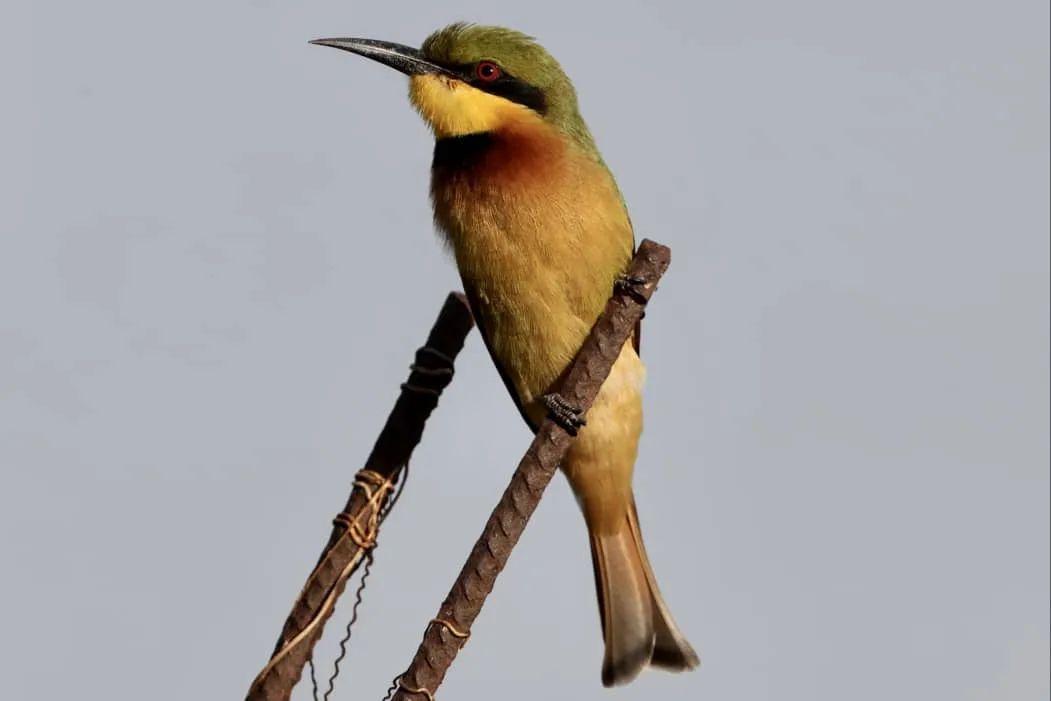
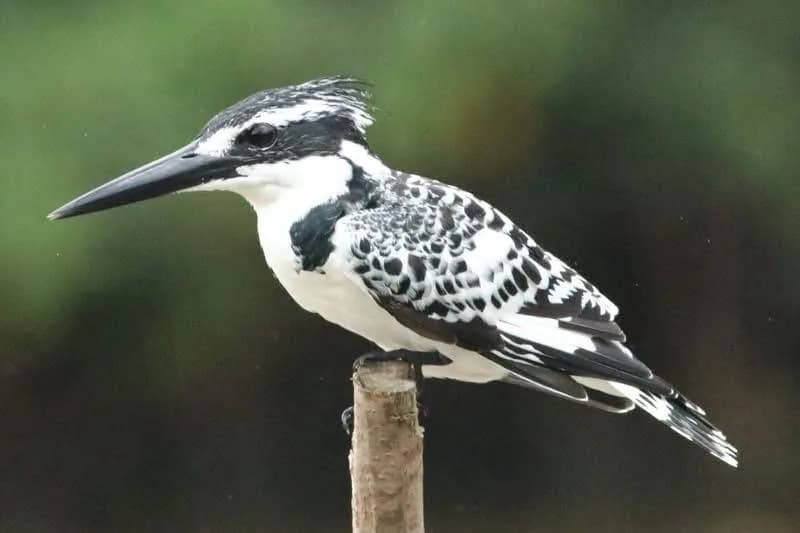
For a fuller list, browse the birds of The Gambia guide or the printable Gambia bird list.
The places you will visit, in plain English
Different birds live in different places, so a good trip mixes habitats. You do not need to memorise any of this, because your guide will pick the right spot for the right bird. But it helps to know what the names on an itinerary mean.
| Habitat | What it looks like | Where to try it |
|---|---|---|
| Forest by a stream | Shady gallery forest with an easy trail | Abuko Nature Reserve |
| Small coastal woods | Short walks, shade and plenty of local guides | Brufut Woods |
| Lagoons and beaches | Tidal water, dunes, waders and terns | Tanji Bird Reserve and Kartong Bird Observatory |
| Mangroves and creeks | Explored by boat among the mangrove roots | Bao Bolong Wetland Reserve |
| Savanna and farmland | Open woodland, the best place for big raptors | Kiang West National Park |
| Freshwater wetlands | Pools, sandbanks and rice fields | Kartong, and the upper river |
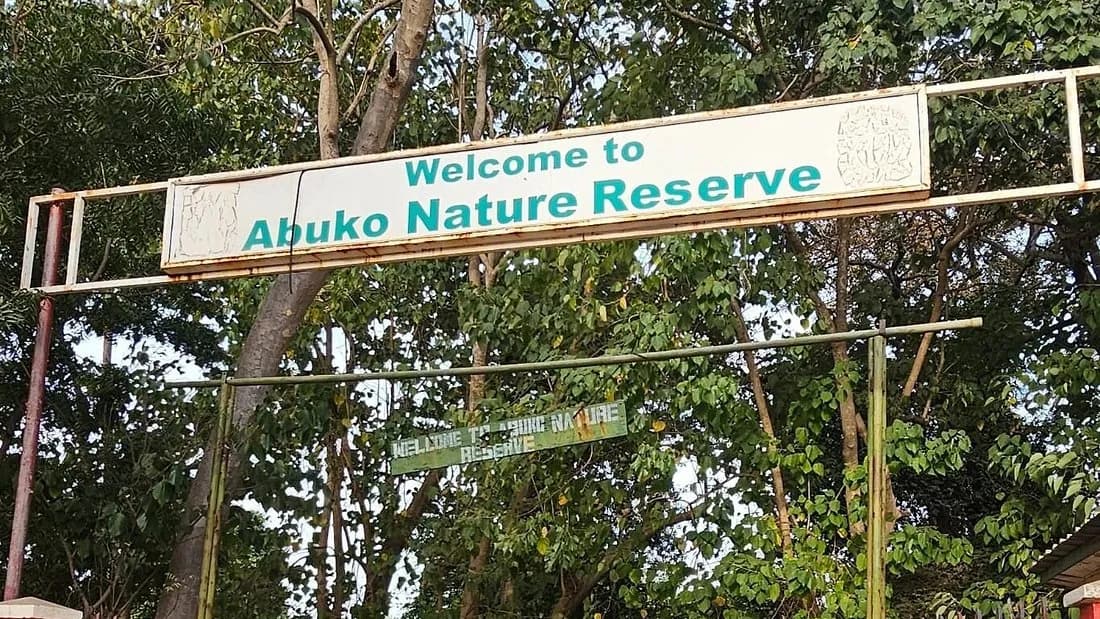
If you only do one thing on your first morning, make it Abuko. It was the country's first designated wildlife reserve, covers about 107 hectares, and more than 270 bird species have been recorded in its forest.[8] It is small enough to feel manageable and rich enough to feel like a proper adventure.
When to go
Most visitors come between November and March, when the weather is dry and comfortable.[4] Birds from Europe also spend the northern winter here: they start to arrive in October and head back north in March or April.[3] That means a winter trip can mix familiar European birds with African ones.
That said, one Gambian birding guide is clear that there is “no best season for birds, it's good all year round”.[4] The short rainy season, which normally runs from about June to September,[2] is the breeding season for many species, though it can be sticky. If your dates are fixed, do not worry. There will be birds. For a month-by-month view, see the When to go section of our birds guide.
Do you need to know anything first?
No. Nobody expects you to name a bird on sight, and honestly that is half the fun of a first trip. Travel guides point newcomers to easy sites. For example, Bradt Guides describes Kotu Stream, on the coast, as “a great introduction to birdwatching in The Gambia”.[9]
What does help is a pair of binoculars, a hat and some patience. The what-to-bring list on Yaya's 15-day birding, wildlife and culture tour is a good starting point: light long-sleeved shirts, comfortable walking shoes, sun cream, mosquito repellent and a notebook or field guide.
What a day in the field looks like
Birds are most active in the cooler hours, so a day usually starts early. A UK operator describes its Gambia tour as splitting the birding “into two sessions with a break at the hotel in the middle of the day”, adding that the pace is easy “but the heat can be uncomfortable at times”.[5] Another local guide agrees that the mornings and evenings are the best for birding, and that it is hot around midday.[4]
Yaya's tours are built the same way. According to his itinerary notes, early starts are followed by a rest during the hottest hours, and typical temperatures run from around 15 to 20°C in the early morning to 25 to 35°C by day, depending on the season. Most birding is done on foot along level tracks, from the vehicle or from a boat, so you need to be comfortable walking for a few hours at a time, but no special fitness.
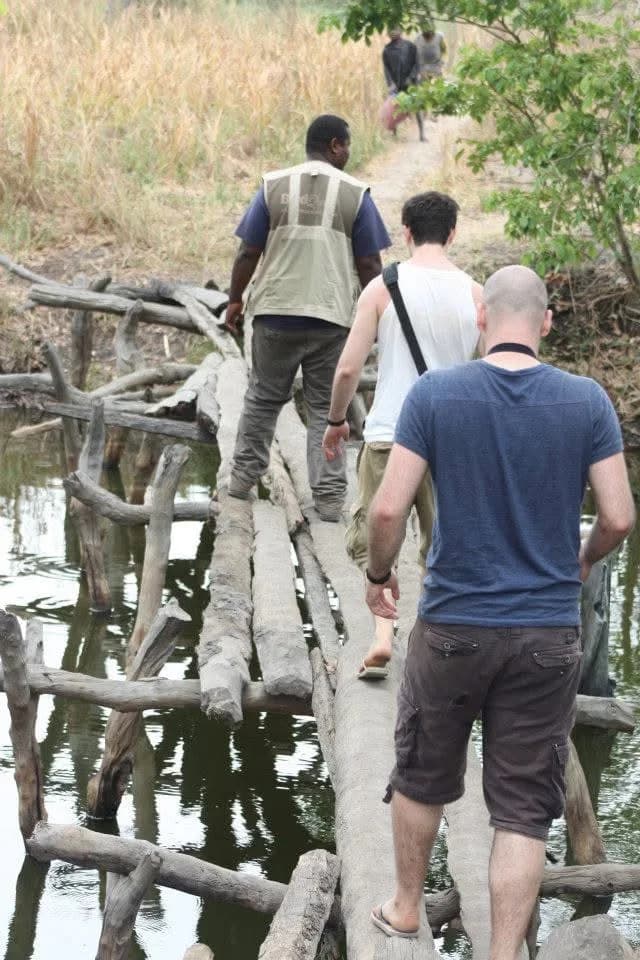
On Yaya's 15-day tour, around 300 species are possible depending on the season. Do not treat that as a target. Treat it as proof that the country is generous with its birds.
Why a local guide makes the difference
You can enjoy The Gambia without a guide, and good local ones are easy to find. Access Gambia advises visitors to seek out “a professional local ornithologist who can guide you on good locations”,[3] and Bradt notes that at Kotu Stream a walk is best “accompanied by a knowledgeable guide”.[9]
For a first-timer, the benefits are simple. A guide knows where a particular bird has been all week, can name it in seconds and makes sure you see it too. Yaya has been guiding birdwatchers across The Gambia since 1996, so he knows the sites, the seasons and the shortcuts.
Frequently asked questions
Do I need to be an experienced birder to go birdwatching in The Gambia?
No. The country is regularly described as an easy introduction to tropical birding,[5] and many of its birds are conspicuously coloured and vocal.[3] A local guide helps with finding and naming what you see.
Is The Gambia a good first trip to Africa?
Birding operators describe it as one of the best introductions to tropical birding and to Africa.[5] It is small, English is the official language,[2] and one UK operator advertises direct flights with no time difference for its November tours.[7]
How many bird species can I expect to see?
The Gambia's checklist has 621 species,[1] but nobody sees them all. Yaya's 15-day tour says around 300 species are possible depending on the season. A shorter trip will naturally list fewer.
How fit do I need to be?
Not very. Yaya's itinerary notes say the tours are paced for comfort rather than endurance, with most birding on level tracks, from the vehicle or from a boat. You should be happy walking for a few hours at a time on uneven ground.
The bottom line
The Gambia is a rare combination: a country small enough to explore comfortably, English-speaking, and full of big, colourful birds that do not hide. You do not need a life list, a long lens or years of experience. You need curiosity, a pair of binoculars, early mornings and a good guide.
If you would like to see these birds with Yaya, look at the tour itineraries or get in touch with your dates and what you would like to see. He will reply himself.
Go deeper
Birds in this guide
Tours that cover this
References
- [1] Wikipedia. List of birds of the Gambia. Accessed 9 October 2026.
- [2] Wikipedia. Gambia. Accessed 9 October 2026.
- [3] Access Gambia. Birdwatching in The Gambia. Accessed 9 October 2026.
- [4] The Gambian Bird Guide. When to go birding in The Gambia. Accessed 9 October 2026.
- [5] Birdfinders. The Gambia birding tour. Accessed 9 October 2026.
- [6] World Travel Guide. Travel to The Gambia. Accessed 9 October 2026.
- [7] Naturetrek. The Gambia (tour GMB01). Accessed 9 October 2026.
- [8] Wikipedia. Abuko Nature Reserve. Accessed 9 October 2026.
- [9] Bradt Guides. The Gambia's best birdwatching sites. Accessed 9 October 2026.
Photographs by Yaya Barry, taken in the field in The Gambia and Senegal.